

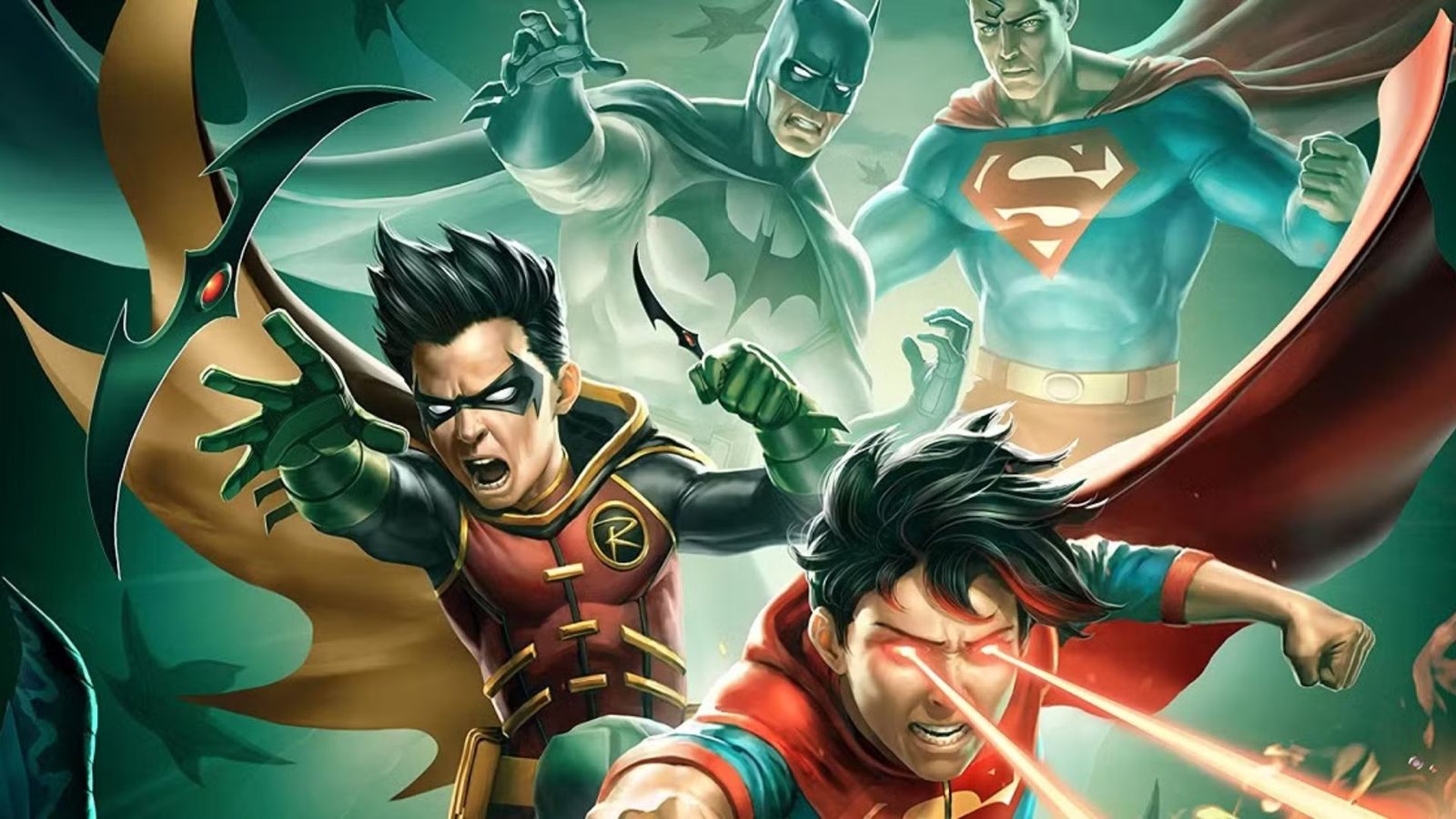
DC animated movies cover far more than Batman adventures. The library includes standalone adaptations, shared universes, multiverse stories, family-friendly releases, and darker projects aimed at older viewers. The biggest source of confusion is that these films do not all belong to one continuity. DC’s own movie catalog separates its animated output across different eras, while the DC Animated Movie Universe (DCAMU) and later Tomorrowverse each have their own internal logic.
If you want the easiest starting point, begin with Justice League: The Flashpoint Paradox, then Justice League: War, and continue through the DCAMU. If you prefer individual stories, Batman: Mask of the Phantasm, Batman: Year One, Superman: Red Son, and The Dark Knight Returns are strong standalone choices.
What Counts as DC Animated Movies?
DC’s animated film catalog is a broad collection rather than one continuous series. The most important distinction is between the DC Animated Universe (DCAU), the DC Animated Movie Universe (DCAMU), the Tomorrowverse, and standalone films.
The DCAU is associated with animated television classics such as Batman: The Animated Series and Justice League Unlimited. The DCAMU was a connected home-video film universe beginning with The Flashpoint Paradox in 2013. After Apokolips War reset that continuity, the Tomorrowverse introduced another connected series beginning with Superman: Man of Tomorrow.
The Best DC Animated Movies to Start With
There is no single best movie for every fan. Your ideal starting point depends on whether you want Batman, Superman, the Justice League, a darker story, or a self-contained adaptation.
| Movie | Best for | Continuity / Style | Why watch it |
|---|---|---|---|
| Justice League: The Flashpoint Paradox | DC newcomers | DCAMU launch | Resets reality and sets up a shared universe |
| Batman: Mask of the Phantasm | Batman fans | DCAU | Emotional, character-driven Batman story |
| Justice League: War | Team-up fans | DCAMU | Introduces the early New 52-inspired League |
| Batman: Year One | Grounded stories | Standalone | Focused Batman origin adaptation |
| Superman: Red Son | Alternate realities | Standalone | Reimagines Superman in a different world |
| Justice League Dark: Apokolips War | Mature DC fans | DCAMU finale | Brings the DCAMU storyline to a dramatic close |
| Batman: The Long Halloween | Mystery fans | Standalone | Crime-focused Batman investigation |
| Justice League: Crisis on Infinite Earths | Multiverse fans | Tomorrowverse | Explores a large-scale continuity crisis |
Justice League: The Flashpoint Paradox is particularly useful if you want a connected journey. DC describes it as a story in which Flash’s attempt to change the past creates an alternate reality where the Justice League never formed. It became the starting point for the DCAMU’s interconnected films.
💡 Pro Tip:
If you are watching the connected universes for the first time, do not mix random Batman, Superman, and Justice League films into the DCAMU or Tomorrowverse order. Check the continuity first; otherwise, character histories and major events can appear contradictory.
DC Animated Movies: DCAMU Watch Order
The DCAMU is the clearest answer when someone searches for DC animated movies in order. DC has described this shared universe as a 15-film journey that began with Justice League: The Flashpoint Paradox and concluded with Justice League Dark: Apokolips War.
The core watch order is:
- Justice League: The Flashpoint Paradox (2013)
- Justice League: War (2014)
- Son of Batman (2014)
- Justice League: Throne of Atlantis (2015)
- Batman vs. Robin (2015)
- Batman: Bad Blood (2016)
- Justice League vs. Teen Titans (2016)
- Justice League Dark (2017)
- Teen Titans: The Judas Contract (2017)
- Suicide Squad: Hell to Pay (2018)
- The Death of Superman (2018)
- Reign of the Supermen (2019)
- Batman: Hush (2019)
- Wonder Woman: Bloodlines (2019)
- Justice League Dark: Apokolips War (2020)
The sequence works best as a continuous story because characters, relationships, and consequences carry across several films. Justice League: War establishes the early team dynamic, while later entries expand the universe into supernatural, cosmic, and darker territory. DC describes Apokolips War as the culmination of this animated journey.
What Came After the DCAMU?
The next major shared continuity was the Tomorrowverse. DC explains that its timeline followed the reset at the end of Apokolips War, beginning with Superman: Man of Tomorrow. The visual style and storytelling approach changed, so viewers should treat it as a new chapter rather than a direct continuation in the ordinary sense.
The Tomorrowverse includes films such as Batman: The Long Halloween, Green Lantern: Beware My Power, Legion of Super-Heroes, Justice League: Warworld, and the three-part Justice League: Crisis on Infinite Earths. The final crisis films expand the story into a multiverse-scale conflict.
Justice League: Warworld, for example, places Batman, Superman, Wonder Woman, and other heroes in a brutal world dominated by gladiatorial combat. That makes it quite different in tone from a grounded Batman mystery or a family-oriented animated adventure.
Standalone Favorites Worth Watching
Some of the strongest DC animated movies work perfectly without a larger viewing order. Batman: Mask of the Phantasm is a standout for viewers who want emotional storytelling alongside detective work. Batman: Year One takes a grounded approach to Bruce Wayne’s early career, while Superman: Red Son explores an alternate version of the Man of Steel.
For something darker, Batman: The Dark Knight Returns adapts Frank Miller’s influential story about an older Batman returning to action. Justice League Dark is another distinct choice, mixing superhero action with supernatural horror through characters such as John Constantine, Zatanna, Deadman, and Etrigan. DC describes the film as a supernatural team-up formed to investigate a mysterious threat affecting civilians across major cities.
📌 Key Takeaway:
The best way to watch DC animated movies is to choose a continuity first. Follow the 15-film DCAMU order if you want one connected story, start with a standalone classic if you want a self-contained experience, or explore the Tomorrowverse if you prefer a newer shared continuity.
Frequently Asked Questions
What is the best DC animated movie to start with?
For a connected-universe experience, Justice League: The Flashpoint Paradox is the strongest starting point because it establishes the DCAMU timeline. For a standalone Batman story, Mask of the Phantasm is an easier entry because you do not need to understand a larger film continuity.
Are all DC animated movies connected?
No. DC has produced multiple continuities and many standalone adaptations. The DCAU, DCAMU, and Tomorrowverse have different timelines, while films such as Batman: Year One and Superman: Red Son can be watched independently.
How many movies are in the DCAMU?
DC identifies 15 films in the DC Animated Movie Universe, beginning with Justice League: The Flashpoint Paradox and ending with Justice League Dark: Apokolips War. The films were released from 2013 through 2020 and share an interconnected storyline.
Should I watch DC animated movies in release order?
Release order is useful when following a specific universe, but it is not necessary for every DC animated film. The better approach is to identify the continuity first, then follow that universe’s recommended order. Standalone adaptations can be watched whenever you like.
Is Justice League: Crisis on Infinite Earths part of the DCAMU?
No. Crisis on Infinite Earths belongs to the later Tomorrowverse, which followed the DCAMU timeline reset. Treating both universes as one continuous series can make the character histories difficult to follow.
Conclusion
The appeal of DC animated movies is their variety. You can follow a carefully connected universe, watch a single Batman mystery in one sitting, explore an alternate Superman reality, or jump into a multiverse event without committing to dozens of films.
For the most coherent long-form experience, start with The Flashpoint Paradox and follow the 15-film DCAMU sequence through Apokolips War. If continuity is less important, choose a standalone favorite based on the kind of story you want. That flexibility is what makes DC’s animated library useful for both longtime fans and newcomers.
