

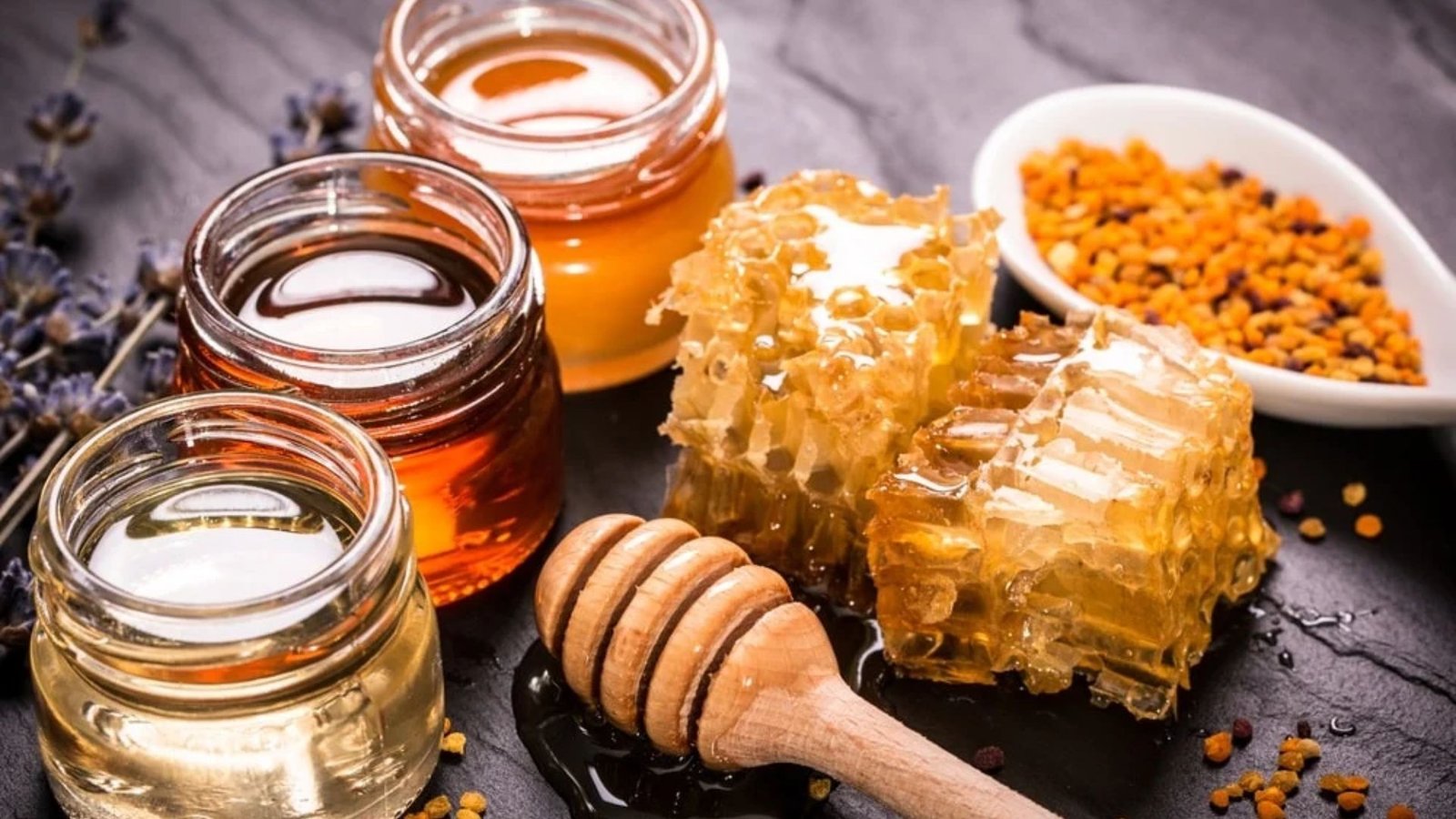
Finding good honey should be simple, but supermarket labels, unclear sourcing and misleading health claims can make choosing the right jar difficult. Searching for local honey near me can help you discover nearby beekeepers, farm shops, farmers’ markets and independent honey producers. This guide explains where to shop, how to compare honey varieties, what labels mean and how to find a trustworthy seller near your home.
1. What Does Local Honey Near Me Mean?
The phrase local honey near me refers to honey produced by beekeepers in or around your area. People often use this search when they want fresh honey, prefer to support local businesses or want to learn where their food comes from.
Local honey can come from small apiaries, family farms, community markets and specialist food shops. Its flavour, colour and texture depend on the flowers available to bees, the season and how the beekeeper processes the honey.
Buying locally can offer several benefits:
- Clearer sourcing: You may be able to ask the beekeeper where the honey was produced.
- Distinctive flavours: Different flowering plants can create different aromas and tastes.
- Support for local producers: Your purchase can help small beekeeping businesses.
- More product information: Some producers explain their harvesting and handling practices.
- Seasonal variety: Different harvests may offer different colours and flavours throughout the year.
However, local production does not automatically guarantee higher quality. Check the seller’s reputation, product label, storage practices and information about the honey’s origin before purchasing.
2. Where to Buy Local Honey Near Me
If you are wondering where to buy local honey near me, start with businesses that can identify their suppliers and explain where their honey comes from.
The best place depends on your location, budget and preferred type of honey. A beekeeper may offer direct-from-the-apiary products, while a farmers’ market may provide several varieties from different producers.
Here are the main places to check:
Local Beekeepers and Apiaries
Buying directly from a beekeeper can help you learn about the honey’s floral source, harvest season and processing method. Some apiaries offer collection by appointment, farm-gate sales or delivery.
Farmers’ Markets
Farmers’ markets are useful when you want to compare several local producers in one visit. You can ask questions about flavour, origin, crystallisation and available jar sizes.
Farm Shops and Produce Stores
Independent farm shops may stock honey from nearby apiaries alongside other regional products. Check the label to confirm that the honey was actually produced locally rather than merely packaged in the area.
Independent Grocery Stores
Some local grocery stores carry regional honey brands. Ask staff which products come from nearby beekeepers and whether they can identify the producer.
Beekeeping Associations and Community Groups
Local beekeeping organisations may help you identify established producers or public honey sales. Community groups can also provide recommendations, although you should verify the seller and product details yourself.
3. How to Find the Best Local Honey Near Me
Finding the best local honey near me involves more than choosing the closest shop. Consider the honey’s origin, taste, handling, price and the seller’s ability to answer basic questions.
Use this simple checklist when comparing options:
- Confirm the origin. Ask where the bees produced the honey and where it was harvested.
- Read the label. Look for the producer’s name, product description, net weight and required food information.
- Ask about processing. Find out whether the honey is raw, filtered or heat-treated, if that information matters to you.
- Compare flavours. Light-coloured honey may taste mild, while some darker varieties have stronger flavours.
- Check the packaging. Choose an intact, properly sealed container with no signs of leakage.
- Compare unit prices. Calculate the price per 100 grams or per kilogram rather than comparing jar prices alone.
A nearby producer who answers questions clearly may be a better choice than a seller offering vague claims about purity or health benefits.
4. Raw Local Honey Near Me: What Should You Know?
Raw local honey near me is a popular search among shoppers who prefer honey that has undergone limited processing. However, the term raw does not have one universally consistent meaning across every market.
Raw honey is generally marketed as honey that has not undergone extensive commercial processing. Depending on the producer, it may be strained to remove larger particles while retaining naturally occurring pollen and other fine material.
Before buying raw honey, ask the producer:
- Whether the honey has been heated.
- Whether it has been strained or finely filtered.
- Where it was harvested.
- How it was stored before packaging.
- Whether the product is pure honey or contains added ingredients.
Raw honey may crystallise over time. Crystallisation is a natural process and does not automatically mean the honey has spoiled.
It is also important to understand that raw honey is not automatically safer, more nutritious or more effective for treating health conditions than other honey. Good handling and reliable sourcing matter regardless of the label.
5. Organic Local Honey Near Me: Is It Worth Buying?
People searching for organic local honey near me often want a product made under specific agricultural or certification standards. However, honey production presents special challenges because bees travel across landscapes and may visit many flowering plants.
Organic certification requirements vary by country and certification programme. A jar described as natural, pure or locally produced is not necessarily certified organic.
When comparing products, ask:
- Does the honey carry a recognised organic certification where applicable?
- Can the producer explain the certification or standards used?
- Is the floral and geographic origin clearly stated?
- Does the label identify the producer or packer?
- Are the claims specific and verifiable?
If organic certification is important to you, check the applicable local rules rather than relying on words such as natural or chemical-free.
Local honey can be a good choice without being certified organic. The right decision depends on your preferences, budget and the information available about each product.
6. Fresh Local Honey Near Me: How to Judge Freshness
Fresh local honey near me often means recently harvested honey that has been stored and handled properly. Unlike many fresh foods, honey can remain stable for a long time when it is properly processed, sealed and stored.
Honey’s appearance changes naturally. It may be clear, cloudy, thick or crystallised depending on its floral source, temperature and processing.
Use these checks when buying:
- Choose a sealed jar without cracks or leaks.
- Look for clear product and producer information.
- Ask about the harvest date if freshness is important.
- Store honey in a cool, dry place away from direct sunlight.
- Keep the lid closed to reduce moisture absorption and contamination.
Crystallisation alone is not a sign of poor quality. If you prefer liquid honey, you can gently warm a closed container in warm water, provided the packaging is suitable and you avoid overheating it.
Do not buy honey with signs of contamination, a damaged seal or unexplained changes in smell or appearance.
7. Local Honey Near Me for Allergies: Does It Help?
Some shoppers look for local honey near me for allergies because they hope it will relieve seasonal symptoms. The idea is that local honey contains pollen from nearby plants and might help the body become less sensitive to allergens.
However, there is not enough reliable scientific evidence to recommend eating local honey as a treatment or prevention method for seasonal pollen allergies.
The pollen that commonly triggers seasonal allergies is often airborne pollen from trees, grasses and weeds. The pollen found in honey may differ in type and amount, so eating honey does not provide a dependable way to manage exposure to those allergens.
If you experience sneezing, itchy eyes, a runny nose or other allergy symptoms, consider these steps:
- Identify possible triggers with help from a healthcare professional.
- Ask a pharmacist or clinician about appropriate allergy treatments.
- Follow advice on reducing exposure to relevant pollen.
- Seek medical advice if symptoms persist or interfere with daily activities.
Honey may be enjoyed as a food, but it should not replace proven allergy care. Never give honey to a child younger than 12 months because of the risk of infant botulism.
8. How Much Does Local Honey Cost?
The price of local honey depends on the region, harvest size, floral source, packaging, processing and seller. Specialty varieties may cost more than everyday table honey, while larger jars can offer a lower price per unit.
Rather than assuming that the most expensive jar is the best, compare products by weight and sourcing.
| Product type | Typical selling format | What may affect the price | What to check |
|---|---|---|---|
| Everyday local honey | Small or medium jar | Harvest and packaging costs | Producer and origin |
| Raw local honey | Jar or squeeze bottle | Processing and production method | Meaning of the raw claim |
| Comb honey | Sections of edible honeycomb | Packaging and availability | Food-grade handling |
| Organic-certified honey | Jar or larger container | Certification and production costs | Recognised certification |
| Specialty floral honey | Small or medium jar | Floral source and seasonal supply | Floral-origin claim |
| Bulk local honey | Large jar or food-service container | Quantity and packaging | Price per kilogram and storage needs |
| Gift honey | Decorative jar or set | Presentation and packaging | Actual honey quantity |
These categories are not fixed price tiers. Compare current prices in your area because costs and availability vary substantially between sellers.
9. Local Honey Near Me for Sale: What Should You Check?
When searching for local honey near me for sale, look for a seller who provides clear product information and answers questions without making exaggerated promises.
A trustworthy producer should be able to explain the honey’s origin and provide appropriate product details. Depending on local food regulations, packaging may also need to include specific labelling information.
Before making a purchase, check:
- The producer’s or seller’s identity.
- The stated country or region of origin.
- The net weight and price.
- The ingredient list, where required.
- Any relevant certification claims.
- The seal and condition of the container.
- The seller’s return or complaint process.
Be cautious of claims that honey cures diseases, guarantees allergy relief or has exceptional health effects without credible evidence.
Honey is primarily a source of sugars. Although it contains small amounts of other naturally occurring compounds, it should not be treated as a substitute for medical care or a balanced diet.
10. Local Honey Near Me Within 5 Miles or 20 Miles
Searches such as local honey near me within 5 mi and local honey near me within 20 mi show that shoppers want a convenient nearby source.
The most useful search radius depends on where you live. In a city, you might find honey at a nearby grocery shop or market. In a rural area, a beekeeper or apiary may be farther away but offer direct sales.
| Search radius | Places to investigate | Best approach |
|---|---|---|
| Within 5 miles | Grocery stores, farm shops and nearby markets | Prioritise convenient collection |
| Within 10 miles | Independent food shops and local producers | Compare origin and price |
| Within 20 miles | Apiaries, farms and regional markets | Contact sellers before travelling |
| Beyond 20 miles | Specialist producers and larger regional markets | Check delivery or collection arrangements |
These distances are search preferences, not a guarantee that sellers exist within each radius.
To narrow your search, enter your town, postcode or neighbourhood into a map or search application. Use terms such as “beekeeper,” “apiary,” “farm shop” and “farmers’ market” alongside your location.
Confirm the address and collection arrangements before setting off. A business may advertise honey but have limited stock or sell only on certain days.
11. Local Honey Near Me Open Now: How to Check Availability
If you need local honey near me open now, check the seller’s current opening hours before travelling. Business listings can be outdated, and seasonal markets may operate only on specific days.
Use this process:
- Search for local honey sellers in your town or neighbourhood.
- Check the listed opening hours and any holiday notices.
- Review recent business updates, if available.
- Call or message the seller to confirm honey is in stock.
- Ask whether you can purchase directly or need an appointment.
An apiary may not operate like a normal shop. Some beekeepers sell honey by appointment, at scheduled market stalls or through local collection points.
If you cannot find an open seller, consider a nearby grocery store or farm shop that stocks honey from identifiable local producers.
12. Who Sells Local Honey Near Me?
Several types of businesses may sell honey from local producers. The best option depends on whether you value direct contact with the beekeeper, convenience, variety or bulk purchasing.
| Seller | Main advantage | Questions to ask |
|---|---|---|
| Local beekeeper | Direct information about production | Where was it harvested? |
| Apiary shop | Specialist honey selection | Which varieties are available? |
| Farmers’ market stall | Opportunity to compare producers | Which beekeeper supplied the honey? |
| Farm shop | Convenient access to regional food | Is the honey produced nearby? |
| Independent grocery | Regular shopping convenience | Can you identify the producer? |
| Local food cooperative | May offer regional products | How is supplier origin verified? |
| Online regional seller | May offer delivery or collection | What are the delivery conditions? |
If a shop carries several honey brands, compare the labels instead of assuming that every product is local.
Direct communication is especially useful when you want a particular floral variety, a large container or information about the harvest season.
13. Bulk Local Honey Near Me: Buying Larger Quantities
Bulk local honey near me is a useful search for families, bakeries, restaurants and people who use honey regularly. Larger containers may reduce the cost per kilogram, although the savings depend on the seller’s pricing.
Before buying in bulk, calculate how much honey you can reasonably use and how you will store it.
Consider these points:
- Quantity: Compare the total price and cost per kilogram.
- Container: Choose food-grade packaging that closes securely.
- Storage: Keep the container dry, sealed and away from excessive heat.
- Handling: Use clean, dry utensils when transferring honey.
- Shelf management: Label the container with the purchase date if helpful.
- Source: Confirm the origin and product details before committing to a large order.
Bulk honey can be convenient, but buying a small jar first is sensible if you have never tried that producer’s honey. Taste and texture can vary considerably between harvests.
14. How to Choose Between Different Local Honey Varieties
Honey’s flavour depends partly on the flowers bees visit. The same producer may offer different varieties across seasons, depending on the plants available and the conditions of the harvest.
Common descriptions include floral, fruity, herbal, mild, rich and caramel-like. These are taste descriptions rather than guarantees of a particular flavour.
| Honey variety or description | Common characteristics | Suitable uses |
|---|---|---|
| Light floral honey | Often mild and delicate | Tea, yoghurt and toast |
| Darker honey | May have a stronger, richer taste | Marinades, sauces and baking |
| Wildflower honey | Flavour varies with local plants | Everyday use and dressings |
| Clover honey | Often mild and sweet | Breakfast and general cooking |
| Comb honey | Honey presented in edible beeswax cells | Cheese boards and special servings |
| Crystallised honey | Naturally thickened with sugar crystals | Spreading and baking |
These characteristics are general tendencies, not strict rules. Floral origin, season, storage and processing can all influence the final product.
If a label names a specific flower source, ask the producer how that designation was established. Some honey comes from multiple floral sources, so a single-flower description may require particular production conditions.
15. Is Local Honey Better Than Supermarket Honey?
Local honey is not automatically better than supermarket honey. Both can be good choices when they are authentic, properly handled and accurately labelled.
The main difference often lies in traceability, availability and the opportunity to speak directly with the producer.
Local honey may be appealing if you want to support nearby beekeepers, explore regional flavours or buy directly from the source. Supermarket honey may offer greater convenience, consistent availability and a wider range of price points.
Use this comparison to decide what matters most to you.
| Feature | Local producer | Supermarket product |
|---|---|---|
| Direct contact with producer | Often possible | Usually limited |
| Regional sourcing | May be easier to verify directly | Depends on the label and brand |
| Variety | Depends on local harvests | Often includes several brands |
| Availability | May be seasonal or limited | Usually more predictable |
| Price | Varies by producer and harvest | Varies by brand and size |
| Bulk purchasing | May be available directly | Depends on the store |
| Product information | Producer may explain the harvest | Label provides standard product details |
Choose according to the evidence available, not simply the words “local,” “natural” or “premium” on the packaging.
16. How to Store Local Honey Properly
Correct storage helps preserve honey’s quality and prevents unnecessary contamination. Honey generally keeps well when stored in a clean, dry, tightly sealed container.
Follow these simple practices:
- Keep honey in a cool, dry cupboard.
- Avoid direct sunlight and excessive heat.
- Close the lid firmly after each use.
- Use clean, dry spoons rather than introducing water or food particles.
- Follow any storage instructions on the packaging.
- Keep honey away from strong odours that could affect its aroma.
Refrigeration is generally unnecessary and can encourage crystallisation. If the honey becomes grainy, that change alone does not mean it has spoiled.
Never give honey to babies younger than one year, including honey used in cooking or mixed into drinks. The risk of infant botulism applies even when honey looks and smells normal.
17. Frequently Asked Questions
Where can I buy local honey near me?
Check local beekeepers, apiaries, farmers’ markets, farm shops and independent grocery stores. Confirm the producer’s location and current stock before travelling, because not every seller offers direct sales or keeps honey available throughout the year.
What is the best local honey near me?
The best choice depends on your taste, budget and preferred production method. Compare the honey’s origin, label, packaging, flavour and seller information rather than relying only on price or claims such as raw, natural or premium.
Is raw local honey healthier than regular honey?
Raw honey undergoes different processing from some commercial honey, but raw does not automatically mean healthier or safer. Both raw and processed honey are high in sugars, and neither should replace medical treatment.
Can local honey help with seasonal allergies?
Reliable evidence does not support using local honey as a proven treatment or prevention method for seasonal pollen allergies. Speak with a healthcare professional about appropriate ways to manage allergy symptoms.
Where can I find local honey within 5 miles?
Search for beekeepers, farm shops, farmers’ markets and grocery stores near your postcode or neighbourhood. Verify the seller’s location, opening hours and available stock because a five-mile search radius cannot guarantee that a suitable producer exists nearby.
Can I buy bulk local honey directly from a beekeeper?
Many beekeepers offer larger jars or bulk containers, although quantities and collection arrangements vary. Ask about the price per kilogram, packaging, origin and storage requirements before placing a large order.
Conclusion
Finding good local honey starts with choosing a reliable seller and understanding what the label actually tells you. Compare nearby beekeepers, farmers’ markets, farm shops and grocery stores, then check the origin, quality information, packaging and price before buying.
Local honey can introduce you to distinctive regional flavours while helping support nearby producers. However, claims about organic certification, raw processing and allergy benefits deserve careful attention.
