

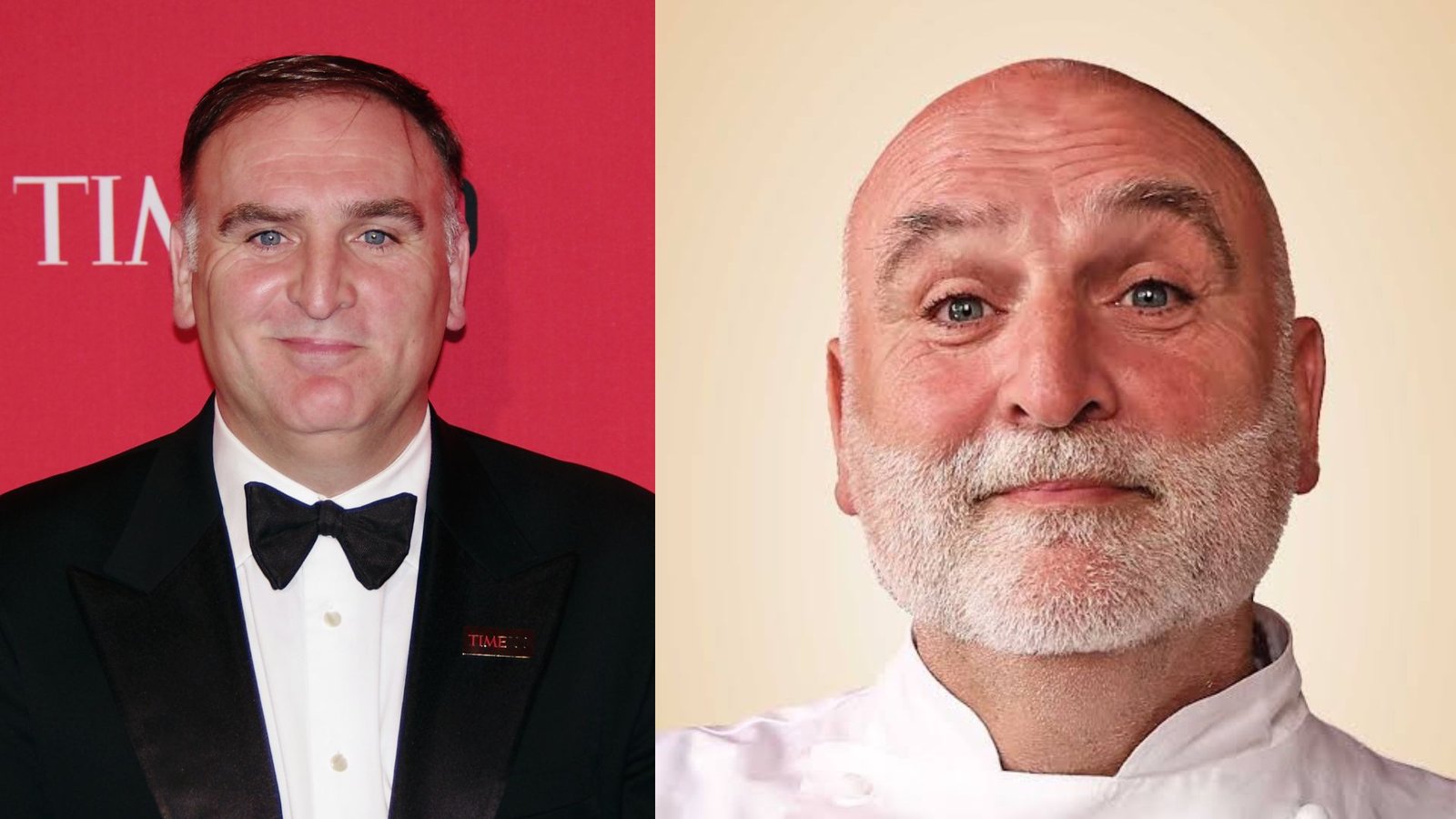
A chef can become famous for a signature dish, a restaurant, or a television appearance. José Andrés built his reputation through all three—but his career became much bigger than the restaurant kitchen. For people searching for José Andrés, the interesting question is not simply who he is. It is how a Spanish-born chef became one of America’s most recognizable culinary figures while also turning food into a tool for disaster relief.
José Andrés is a Spanish-American chef, restaurateur, author, educator, television personality, and founder of World Central Kitchen. He was born in Mieres, Asturias, Spain, in 1969 and moved to the United States in his early twenties. His arrival in America eventually led to Jaleo in Washington, D.C., a restaurant that helped introduce Spanish tapas and small-plate dining to a much wider American audience.
Today, his career spans restaurants, culinary education, media, philanthropy, and humanitarian work. His professional story is especially useful for understanding how a chef can turn practical cooking skills into a broader business and social mission.
José Andrés’ Early Life and Culinary Training
José Ramón Andrés Puerta grew up in Spain, where food was part of everyday family life. He began pursuing cooking seriously as a teenager and attended culinary school in Barcelona. Before establishing himself in the United States, he also worked in professional kitchens, including the renowned El Bulli under chef Ferran Adrià.
That training mattered because Andrés developed an approach that combined traditional Spanish cooking with experimentation. Instead of treating classic food and modern techniques as opposites, he learned to use both.
At about 21, Andrés moved to the United States. World Central Kitchen says he arrived with just $50, after culinary school, military cooking experience, and professional restaurant work in Catalonia.
His early American career eventually brought him to Washington, D.C., where he became involved with Jaleo.
That move changed the direction of his career.
How Jaleo Made José Andrés Famous
When Jaleo opened in Washington, D.C., in 1993, Spanish tapas were not yet as familiar to many American diners as they are today. Andrés helped make the small-plate format accessible through food that encouraged people to share several dishes rather than order one large entrée.
José Andrés Group describes Jaleo as an important early driver of the shared-plates movement in the United States.
The idea seems simple now, but there was a practical advantage to it: diners could experience several flavors during one meal.
That became one of Andrés’ recurring strengths. Rather than presenting Spanish cuisine as a fixed collection of traditional recipes, he treated it as something that could evolve.
His restaurant portfolio subsequently expanded with concepts including Café Atlántico, Zaytinya, Oyamel, and minibar by José Andrés.
Why Jaleo Was More Than Another Restaurant
One of the less obvious lessons from Jaleo is that Andrés did not simply export Spanish food unchanged.
He adapted the experience to American dining habits while keeping recognizable Spanish techniques and flavors. That balance helped make the cuisine approachable without reducing it to a generic version of Spanish food.
This is an important distinction when looking at his career: his influence has often come from translation, not just invention.
He translated Spanish culinary traditions into formats that American diners could understand and enjoy.
What Kind of Food Does José Andrés Cook?
José Andrés is strongly associated with Spanish cuisine, but describing his cooking simply as “Spanish food” misses much of his career.
His restaurants have explored Spanish, Mediterranean, Mexican, American, Greek, Peruvian, and other culinary traditions. José Andrés Group says its restaurants reflect ideas gathered through travel, research, experimentation, and inspiration.
His cooking can generally be understood through several characteristics:
- Strong respect for traditional ingredients
- Spanish culinary foundations
- Small plates and shared dining
- Creative presentation
- Modern culinary techniques
- Cross-cultural experimentation
- An emphasis on hospitality and communal eating
His avant-garde work at minibar represents another side of his cooking. The Washington, D.C., restaurant earned two Michelin stars, demonstrating that his career extends well beyond casual tapas and traditional Spanish dishes.
Traditional Food Meets Modern Technique
One reason Andrés has remained relevant across different culinary eras is his ability to connect familiar flavors with unfamiliar techniques.
A diner might recognize an ingredient or flavor from Spain but encounter it in a completely different texture or presentation.
That approach reflects the influence of his training at El Bulli and his broader interest in culinary experimentation.
The practical lesson for home cooks is surprisingly straightforward: innovation does not always require inventing a completely new ingredient. Sometimes it means changing texture, presentation, portion size, or the way familiar ingredients are combined.
José Andrés and ThinkFoodGroup
As Andrés’ restaurant career expanded, his work evolved from that of an individual chef into a larger hospitality organization.
In 2006, Andrés and business partner Rob Wilder transformed their restaurant interests into ThinkFoodGroup. The company became the umbrella for his restaurants and other culinary projects.
Today, the organization operates under the José Andrés Group name. The company says it operates about 40 restaurants in the United States and beyond, including the two-Michelin-starred minibar by José Andrés.
This is an important part of understanding his success.
A restaurant empire cannot depend entirely on the chef standing behind one stove every night. Andrés’ career demonstrates how culinary identity can become a scalable organization through chefs, managers, hospitality professionals, operations teams, and creative leadership.
In other words, his influence is not only about recipes. It is also about building systems around a culinary point of view.
World Central Kitchen: Why José Andrés Became Known Beyond Restaurants
The biggest change in Andrés’ public identity came in 2010, when he founded World Central Kitchen following the devastating earthquake in Haiti.
The basic idea was remarkably practical: when people are facing a crisis and need food, professional cooks and functioning kitchens can become part of the emergency response.
Instead of viewing disaster food relief solely through packaged supplies, World Central Kitchen developed a model centered on preparing meals locally and working with people and businesses already connected to the affected community.
That philosophy became particularly visible after Hurricane Maria struck Puerto Rico in 2017.
World Central Kitchen’s response demonstrated how restaurants, cooks, suppliers, volunteers, and local kitchens could be coordinated during a major crisis. Historical reporting documented the organization producing enormous numbers of meals in Puerto Rico while navigating damaged infrastructure and supply problems.
The “Local Kitchen” Insight
One of the most useful lessons from Andrés’ humanitarian work is that disaster food relief does not necessarily mean bringing everything from outside.
World Central Kitchen emphasizes working with local restaurants, cooks, farmers, suppliers, and communities whenever possible. Its own account of the Haiti response describes Andrés learning from displaced residents about how they preferred their beans prepared.
That detail reveals something deeper about the model:
feeding people effectively requires listening to them.
A meal can satisfy a nutritional requirement and still feel disconnected from the community receiving it. Local knowledge can improve both practicality and dignity.
This is one of the less commonly discussed aspects of Andrés’ work.
José Andrés in Ukraine and Other Crisis Zones
World Central Kitchen’s work has expanded far beyond the organization’s original response in Haiti.
In Ukraine, WCK began cooking within days of Russia’s full-scale invasion in February 2022 and worked with Ukrainian chefs, restaurants, community kitchens, and other local partners. In August 2026, WCK announced that it had reached 300 million meals served across Ukraine and that Andrés had received Ukraine’s National Legend of Ukraine distinction.
The organization’s broader mission now covers humanitarian, climate, and community crises.
This provides another practical insight into Andrés’ approach: the restaurant model of sourcing ingredients, organizing kitchens, managing teams, and feeding large numbers of people can be adapted to emergency conditions.
The challenge is no longer simply preparing food.
It becomes a logistics problem involving:
- Ingredient sourcing
- Kitchen access
- Food safety
- Transportation
- Local partnerships
- Staffing
- Distribution
- Rapid decision-making
That combination helps explain why a chef’s operational experience can become valuable during a disaster.
Awards and Recognition
José Andrés has received recognition for both culinary achievement and humanitarian work.
The James Beard Foundation named him Best Chef: Mid-Atlantic in 2003 and Humanitarian of the Year in 2018.
He was also awarded the National Humanities Medal in 2015. His professional recognition includes Michelin-starred achievement for minibar, while his broader public profile has included appearances on TIME’s “100 Most Influential People” list in 2012 and 2018.
More recently, his humanitarian work continued to attract international recognition. In 2026, he and World Central Kitchen received the Roger E. Joseph Prize, while Ukraine recognized Andrés with its National Legend of Ukraine award.
These awards represent different parts of his career rather than a single achievement. His restaurant work, culinary creativity, public education, and humanitarian efforts have all contributed to his reputation.
What Makes José Andrés Different From a Typical Celebrity Chef?
Many celebrity chefs build their public profiles around restaurants, cookbooks, television, or endorsements.
Andrés has used those same platforms, but his career has an unusual second structure: humanitarian food operations.
That creates an interesting overlap.
The skills required to run a successful restaurant—purchasing, staffing, food preparation, kitchen organization, logistics, quality control, and serving people quickly—can also become useful during emergencies.
Three Less-Obvious Lessons From His Career
1. Food can be a form of infrastructure.
A functioning kitchen can become an important community asset after a disaster. It provides more than calories; it creates a way to organize people, supplies, workers, and local businesses around an immediate need.
2. Local knowledge can outperform a one-size-fits-all solution.
The Haiti experience shows why listening to residents matters. Food relief becomes more effective when meals reflect local tastes, ingredients, and cooking practices.
3. Culinary creativity and operational discipline are not opposites.
Andrés’ restaurant career demonstrates creativity, while his humanitarian work requires logistics and execution. The combination is arguably more important than either skill alone.
These points are useful even outside professional kitchens. A home cook, restaurant owner, or hospitality student can learn from the same principle: creativity becomes much more valuable when it can be executed consistently.
What Can Home Cooks Learn From José Andrés?
You do not need professional equipment or a Michelin-starred kitchen to apply some of Andrés’ culinary philosophy.
Start with the way he approaches ingredients.
Instead of automatically following a complicated recipe, consider:
- What ingredient is the main character?
- Can its texture be improved?
- Can several small dishes create a more interesting meal?
- Which flavors complement rather than overpower each other?
- Can presentation make a simple dish feel more inviting?
Spanish-style shared dining is particularly useful for home entertaining because it encourages variety without requiring one enormous centerpiece dish.
For example, instead of preparing one complicated entrée for six guests, a host could serve roasted vegetables, a simple tortilla, marinated seafood, bread, olives, and several small plates.
The meal becomes interactive.
That reflects a broader Andrés philosophy: food is not merely something placed in front of people. It can create conversation and connection.
Frequently Asked Questions
Who is José Andrés?
José Andrés is a Spanish-American chef, restaurateur, author, educator, television personality, and humanitarian. He is the founder of World Central Kitchen and the leader behind José Andrés Group. He is particularly known for helping popularize Spanish tapas in the United States and for his food-based disaster-relief work.
What restaurants does José Andrés own?
José Andrés Group operates restaurants across the United States and beyond, with concepts spanning Spanish, Mexican, Mediterranean, American, Greek, Peruvian, and other cuisines. Its portfolio includes Jaleo and the two-Michelin-starred minibar by José Andrés. The group currently describes its operation as approximately 40 restaurants.
Why did José Andrés start World Central Kitchen?
José Andrés founded World Central Kitchen in 2010 after the earthquake in Haiti. The organization was created around the idea that professional cooks and local food systems could play a direct role in helping communities recover from disasters and crises.
Is José Andrés a Michelin-starred chef?
Yes. His restaurant minibar by José Andrés in Washington, D.C., has received two Michelin stars. His culinary recognition also includes major James Beard Foundation awards and other national and international honors.
What is José Andrés best known for?
José Andrés is best known for both his culinary career and his humanitarian food work. He helped popularize Spanish tapas in America through Jaleo and later created a large restaurant group, while World Central Kitchen made him internationally prominent for providing meals during humanitarian and disaster crises.
Conclusion
José Andrés’ career is difficult to fit into the traditional definition of a celebrity chef. His story begins with Spanish culinary training and restaurants but eventually reaches fine dining, hospitality, education, television, and international disaster response.
His influence comes partly from what he cooks, but perhaps even more from how he thinks about food. Jaleo helped make Spanish small plates familiar to American diners, while World Central Kitchen demonstrated how professional cooking and local food networks can become part of emergency response.
For anyone studying José Andrés, the most useful takeaway is that his career connects creativity with execution. A great dish requires technique; a successful restaurant requires systems; and feeding people during a crisis requires both.
That combination is what makes his story relevant far beyond the restaurant industry.
