

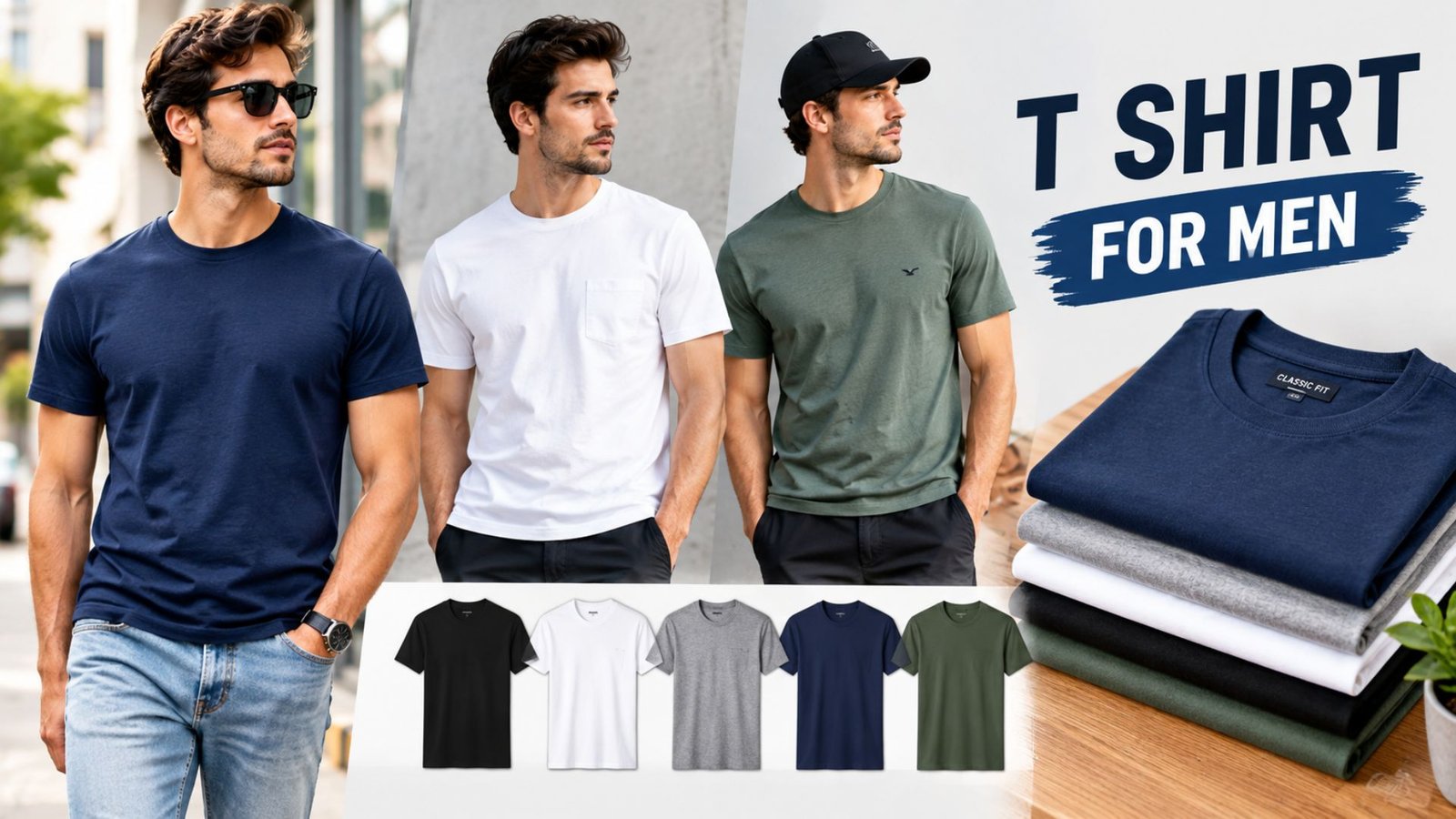
Finding the right t shirt for men can be harder than it looks. An uncomfortable fabric, poor fit, or unsuitable color can affect your entire outfit, even when you pair it with your favorite jeans. The good news is that you can build a versatile wardrobe by understanding a few simple details. From everyday cotton basics to smart polo shirts and modern oversized designs, this guide explains how to choose comfortable, attractive T-shirts that suit your style, budget, and daily routine.
1. What Makes a Good T Shirt for Men?
A good T-shirt combines comfort, a flattering fit, durable stitching, and a fabric that suits the weather. You should be able to wear it for hours without feeling restricted or uncomfortable.
Before buying, check these essential features:
- Fabric quality: Choose breathable materials that feel soft against your skin.
- Fit: The shoulders, chest, and waist should suit your body shape.
- Stitching: Look for neat seams and a properly finished neckline.
- Color: Pick shades that work with your existing trousers, jeans, and shoes.
- Durability: Check the fabric thickness and care instructions to help avoid unwanted shrinking or fading.
The best choice is not always the most expensive one. A well-made basic T-shirt can offer excellent value when it fits properly and maintains its shape after washing.
2. Which T Shirt for Men Is Best for Everyday Wear?
A basic crew-neck T-shirt is one of the most practical choices for everyday outfits. It works with jeans, chinos, joggers, shorts, and casual jackets.
A cotton t shirt for men is a popular option because cotton feels soft and allows air to circulate. However, cotton can retain moisture during heavy sweating, so moisture-wicking blends may suit workouts better.
Consider these everyday options:
- Basic T-shirt: Ideal for simple, versatile outfits.
- Plain T-shirt: Suitable for minimal, clean styling.
- Cotton T-shirt: A comfortable choice for daily activities.
- Polo T-shirt: A smart-casual alternative for dinners, casual offices, and outings.
Choose two or three dependable styles first. You can then add statement colors, patterns, and different fits to expand your wardrobe.
3. Popular T-Shirt Styles Every Man Should Know
Different designs suit different occasions. Understanding the main styles helps you select clothing that matches your preferences without buying unnecessary items.
Crew-Neck T-Shirts
Crew-neck designs have a rounded neckline and suit most casual outfits. They work well on their own or underneath shirts, hoodies, and jackets.
V-Neck T-Shirts
A v neck t shirt for men creates an open neckline that can make an outfit look slightly less formal than a crew-neck design. Choose a moderate V shape for a balanced appearance.
Polo and Collar T-Shirts
A polo t shirt for men usually features a collar and a short button placket. It offers a polished appearance without the formality of a traditional dress shirt.
Full-Sleeve and Long-Sleeve T-Shirts
A full sleeve t shirt for men provides additional coverage during cooler weather. A long sleeve t shirt for men can also work as a layering piece under a jacket or overshirt.
Oversized T-Shirts
An oversized t shirt for men has a relaxed silhouette, often with dropped shoulders and a wider body. Pair it with straight-leg jeans or fitted trousers to keep the outfit balanced.
Sleeveless T-Shirts
A sleeveless t shirt for men suits workouts, warm weather, and relaxed summer outfits. Choose a comfortable arm opening and a fabric that handles your intended activity.
4. Best T-Shirt Colors and How to Style Them
Color influences how easily you can combine a T-shirt with other clothing. Neutral shades offer flexibility, while brighter colors help create a distinctive look.
- White T-shirt: A white t shirt for men pairs easily with blue jeans, black trousers, and neutral shorts.
- Black T-shirt: A black t shirt for men creates a simple, versatile outfit with denim, chinos, or cargo trousers.
- Red T-shirt: A red t shirt for men adds a bold accent to neutral bottoms.
- Pink T-shirt: A pink t shirt for men works well with white, grey, navy, and beige.
- Green T-shirt: A green t shirt for men complements denim, cream trousers, and earthy colors.
If you are building a wardrobe from scratch, start with white, black, grey, and navy. Add red, pink, or green when you want more variety.
5. Complete Comparison Table: Men’s T-Shirt Styles
Use this table to compare popular styles, their best uses, and the details worth checking before you buy.
| T-shirt style | Best for | Styling suggestion | What to check |
|---|---|---|---|
| Basic T-shirt | Everyday wear | Jeans and sneakers | Fit and stitching |
| Plain T-shirt | Minimal outfits | Chinos or denim | Fabric opacity |
| Cotton T-shirt | Casual comfort | Shorts or jeans | Shrinkage instructions |
| Polo T-shirt | Smart-casual events | Chinos and loafers | Collar structure |
| White T-shirt | Versatile styling | Blue jeans | Fabric transparency |
| Black T-shirt | Casual evenings | Dark denim | Color retention |
| Red T-shirt | Statement outfits | Neutral trousers | Color coordination |
| Pink T-shirt | Spring and summer | Beige chinos | Shade and fit |
| Green T-shirt | Casual styling | Denim or cream trousers | Color versatility |
| V-neck T-shirt | Casual layering | Open overshirt | Neckline depth |
| Full-sleeve T-shirt | Cooler days | Jeans and a jacket | Sleeve length |
| Long T-shirt | Relaxed outfits | Slim or straight trousers | Overall proportions |
| Oversized T-shirt | Streetwear | Straight-leg jeans | Shoulder and body width |
| Designer T-shirt | Premium casual wear | Tailored casual trousers | Material and construction |
| Funny T-shirt | Informal occasions | Simple jeans | Print quality |
| Sleeveless T-shirt | Exercise and summer | Athletic shorts | Armhole comfort |
6. How to Choose the Right T-Shirt Fit
The right fit depends on your body shape, personal style, and the occasion. A T-shirt should allow natural movement without pulling across the chest or hanging awkwardly around the waist.
Use these guidelines when checking a size:
- Slim fit: Sits closer to the body and suits a neat, tailored casual look.
- Regular fit: Offers balanced room through the chest, shoulders, and waist.
- Relaxed fit: Provides extra room without necessarily looking oversized.
- Oversized fit: Creates a loose silhouette with more width and often dropped shoulders.
- Longline fit: Extends below the usual T-shirt length for a modern casual appearance.
Check the brand’s size chart instead of relying on small, medium, or large alone. Compare chest width, body length, and shoulder measurements with a T-shirt you already own and like.
💡 Pro Tip: If you shop online, read the product measurements and return policy before ordering. Two T-shirts marked with the same size can fit differently.
7. Which Fabric Should You Choose?
Fabric affects comfort, breathability, durability, and how a T-shirt looks after repeated washing.
Cotton
Cotton is a popular choice for everyday clothing because it feels soft and breathable. A cotton T-shirt works well for casual wear, travel, and relaxed weekends.
Cotton Blends
Cotton-polyester blends can offer a different balance of softness, shape retention, and drying performance. Check the actual fiber percentages rather than assuming every blend performs the same way.
Performance Fabrics
Synthetic performance fabrics often suit exercise because many are designed to move moisture away from the skin and dry quickly. Look for workout-specific features when choosing a T-shirt for running, gym sessions, or outdoor sports.
Lightweight and Heavyweight Fabrics
Lightweight fabric may feel more comfortable in hot weather, while heavyweight fabric can provide more structure. Neither option is automatically better; consider the climate, garment construction, and intended use.
Always read the fiber-content label. The US Federal Trade Commission provides guidance on textile labeling and clothing-care requirements for consumers and businesses. Read the FTC’s clothing and textile guidance.
8. How to Style a T-Shirt for Different Occasions
A few simple combinations can help you create different outfits without buying an entirely new wardrobe.
Everyday Casual Look
Pair a plain T-shirt with jeans and clean sneakers. White, grey, black, and navy make easy starting points.
Smart-Casual Outfit
Choose a polo or a fitted crew-neck T-shirt with chinos and loafers or minimalist sneakers. Add a lightweight jacket when the occasion calls for another layer.
Streetwear Style
Combine an oversized T-shirt with relaxed jeans, cargo trousers, or straight-leg pants. Keep the colors coordinated so the outfit looks intentional rather than unbalanced.
Summer Outfit
Wear a lightweight T-shirt with shorts and breathable footwear. A sleeveless design can work for exercise or informal outdoor activities.
Cooler-Weather Layers
Combine a long-sleeve T-shirt with a denim jacket, overshirt, or casual coat. Choose a comfortable base layer that does not bunch up beneath the outer garment.
9. Are Designer T-Shirts Worth Buying?
A designer t shirt for men may appeal to shoppers who value a particular label, distinctive artwork, special construction, or a recognizable design. However, a higher price does not automatically mean better comfort or durability.
Before paying more, compare:
- Fabric composition and thickness.
- Stitching and finishing quality.
- Print or embroidery durability.
- Fit and available sizing.
- Return policy and warranty, if offered.
- Whether the design and quality justify the price.
Funny T-shirts can also add personality to a casual wardrobe. Look for clear printing, comfortable fabric, and designs that suit the settings where you plan to wear them.
Choose clothing based on its actual quality and your preferences, not simply the name printed on the label.
10. How to Wash and Maintain Your T-Shirts
Good care can help T-shirts retain their shape, color, and appearance for longer. Follow the instructions attached to each garment because fabrics, dyes, and prints can require different treatment.
Use these practical steps:
- Separate colors: Wash dark and bright garments separately when needed to reduce the risk of color transfer.
- Check the label: Follow the recommended washing and drying instructions.
- Turn printed shirts inside out: This can reduce direct friction on the design.
- Avoid unnecessary heat: Use the recommended drying temperature to help prevent damage or shrinkage.
- Treat stains promptly: Use a suitable cleaning method for the fabric and stain.
- Store garments properly: Fold everyday T-shirts neatly or hang them when appropriate for the material.
The Federal Trade Commission explains the role of garment care instructions in its Clothes Captioning guidance.
Do not assume that every cotton shirt needs identical care. The fabric blend, dye, finish, and construction can all affect the recommended method.
11. What Should You Check Before Buying Online?
Online shopping offers plenty of choices, but product photos do not always reveal how a garment feels or fits.
Review these details before placing an order:
- Product description: Confirm the fabric composition and design.
- Size chart: Compare actual measurements with your preferred fit.
- Customer feedback: Look for repeated comments about sizing, shrinking, fading, or print quality.
- Product photographs: Check the neckline, sleeves, stitching, and overall shape.
- Price and value: Compare quality and features rather than price alone.
- Delivery and returns: Understand shipping costs, exchange options, and return deadlines.
A simple buying checklist can prevent common mistakes. Prioritize fit, comfort, and construction before choosing a color or graphic.
Frequently Asked Questions
1. Which t shirt for men is best for daily use?
A regular-fit crew-neck T-shirt made from comfortable cotton or a suitable cotton blend is a practical everyday choice. Neutral colors such as white, black, grey, and navy are easy to match with different outfits.
2. Which color T-shirt should every man own?
White and black are useful starting points because they pair with many trousers and jeans. Grey and navy are also versatile options, while red, pink, and green add variety.
3. Is cotton better than polyester for T-shirts?
Neither fabric is best for every situation. Cotton is popular for everyday comfort, while polyester and performance blends may suit exercise because of their moisture-management and drying properties.
4. How should a men’s T-shirt fit?
The shoulder seams should sit near the natural shoulder line for a conventional fit. The chest should allow comfortable movement, and the length should suit your proportions and preferred style.
5. Can men wear oversized T-shirts with jeans?
Yes. Oversized T-shirts pair well with straight-leg or relaxed jeans. Balancing the proportions of the top and trousers helps create a more coordinated outfit.
6. How can I prevent my T-shirts from shrinking or fading?
Follow the garment’s care label, separate colors when necessary, and avoid excessive heat if the instructions recommend lower temperatures. Turn printed garments inside out when appropriate to help protect their designs.
Conclusion: Find a T-Shirt That Fits Your Lifestyle
The right T-shirt combines a comfortable fit, suitable fabric, reliable construction, and a style that reflects your personality. Start with versatile basics, compare the differences between crew-neck, polo, oversized, and long-sleeve designs, and add colors that work with your existing wardrobe.
When shopping for a t shirt for men, focus on practical value rather than trends alone. Check measurements, read care instructions, and choose designs that suit your everyday activities. A thoughtful selection of well-fitting T-shirts can make getting dressed easier while keeping your style comfortable and consistent.
📌 Key Takeaway:
Start with a few high-quality basics, choose the right fit for your body and lifestyle, and expand your collection with colors and styles you will actually wear.
