

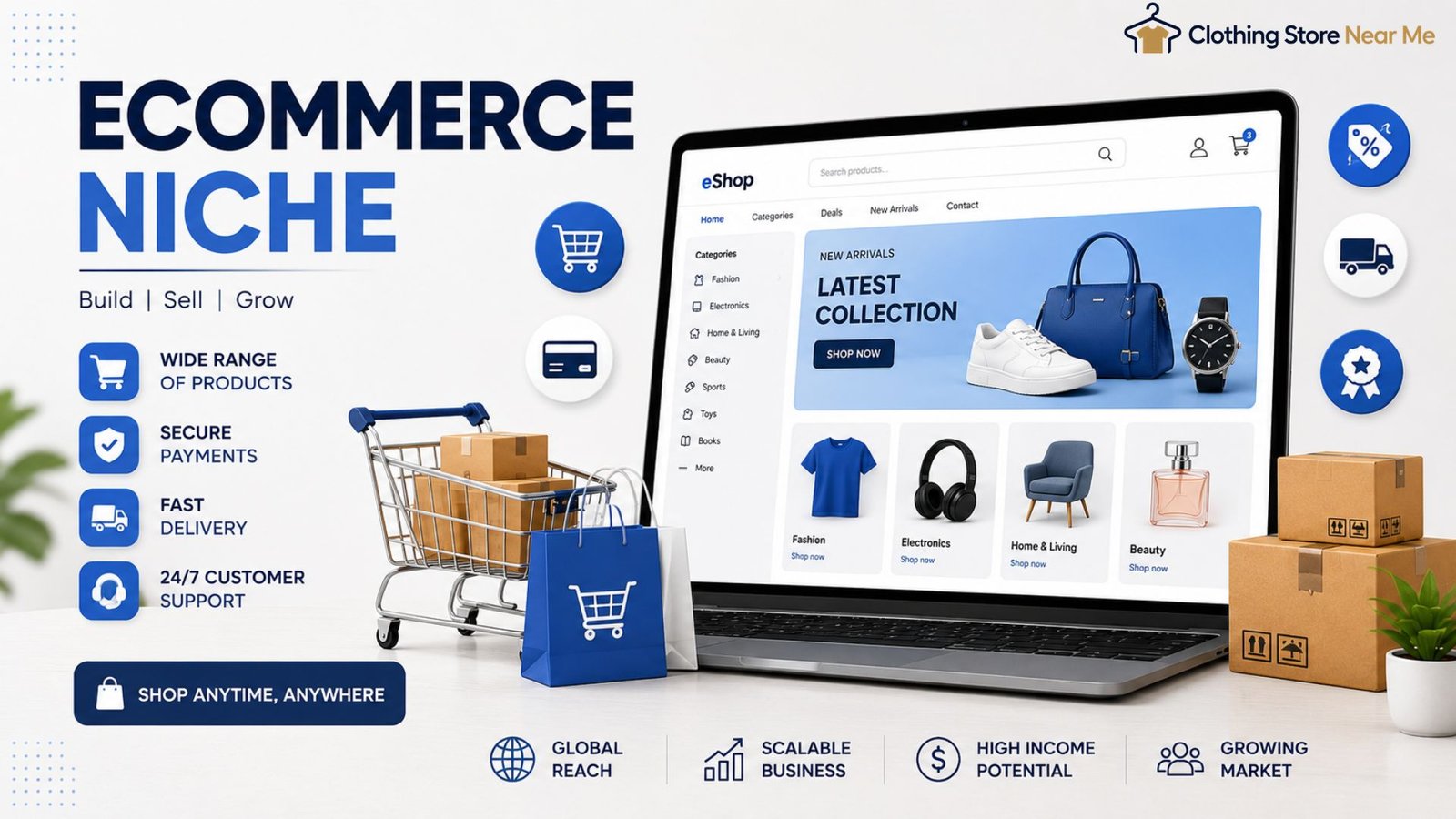
An ecommerce niche is a specific segment of customers, products, or interests that a business targets instead of selling everything to everyone. Choosing the right market focus helps online sellers understand their audience, create better products, and compete more effectively. A well-researched ecommerce niche can turn a simple online store into a recognizable brand by solving a clear customer problem.
Many new entrepreneurs struggle because they start with broad ideas like fashion, electronics, or beauty without identifying a specific audience. A focused approach allows sellers to discover customer needs, analyze competition, and develop marketing messages that connect with buyers.
What Is an Ecommerce Niche?
An ecommerce niche is a specialized category within the larger online shopping industry. Instead of targeting a massive market, businesses concentrate on a smaller group with shared interests, preferences, or purchasing behaviors.
For example, “clothing” is a broad market, while “sustainable workout clothing for women” is a more defined segment. Similarly, “pet products” can become a focused market by targeting premium accessories for indoor cats.
A strong niche usually combines three elements:
- A specific customer group
- A clear problem or desire
- Products that provide a valuable solution
This focused strategy helps smaller businesses compete with larger companies because they can offer specialized experiences rather than general products.
Why Choosing the Right Ecommerce Niche Matters
Selecting the right market direction influences almost every part of an online business, from product selection to advertising campaigns. A focused store can create stronger customer relationships because its messaging feels more relevant.
Some major advantages include:
| Factor | Broad Market Approach | Focused Niche Approach |
|---|---|---|
| Competition | Usually higher due to many sellers | More manageable with targeted positioning |
| Marketing | General messaging | Specific customer-focused campaigns |
| Branding | Harder to create uniqueness | Easier to build authority |
| Customer Loyalty | Often lower | Higher due to specialized solutions |
| Product Decisions | More complicated | Clearer based on audience needs |
A carefully selected market also makes content marketing easier. Blog posts, social media content, and advertisements can address specific questions instead of trying to appeal to everyone.
How to Find a Profitable Ecommerce Niche
Finding the right opportunity requires research rather than guessing. Successful sellers usually examine customer demand, competition levels, and future growth potential before investing money.
Research Customer Problems
The best opportunities often come from solving real frustrations. Look for communities, forums, reviews, and social discussions where people describe problems they want fixed.
For example, customers may search for products that save time, improve comfort, support hobbies, or simplify daily routines. These needs often create opportunities for specialized stores.
Analyze Market Demand
A profitable market needs enough interested buyers. Research tools, marketplace trends, and search behavior can reveal whether people are actively looking for specific products.
Look for signs such as:
- Consistent search interest
- Growing product categories
- Repeat purchase potential
- Active customer communities
A trend that disappears quickly may not support a long-term business, while an evergreen demand category can provide stability.
Evaluate Competition Carefully
Competition is not always negative. A market with existing sellers often proves that customers are willing to spend money.
The goal is not always finding a market with zero competitors. Instead, identify ways to differentiate through:
- Better product quality
- Improved customer experience
- Unique branding
- Educational content
- Faster service
💡 Pro Tip:
Before launching products, study customer reviews on major marketplaces. Negative reviews often reveal gaps where a new brand can create a better solution.
Popular Types of Ecommerce Niches
Different categories attract different customer groups. Some markets remain popular because they connect with ongoing consumer interests.
Health and Wellness Products
Consumers continue to seek products related to fitness, self-care, relaxation, and healthy lifestyles. However, sellers should focus on specific audiences rather than entering the entire wellness market.
Examples include:
- Home workout accessories
- Sleep improvement products
- Fitness equipment for beginners
- Specialized wellness tools
Sustainable and Eco-Friendly Products
Environmental awareness has increased interest in reusable, ethical, and low-waste products. Businesses can target customers who prefer responsible purchasing decisions.
Examples include reusable household items, sustainable fashion accessories, and environmentally friendly alternatives.
Pet-Focused Products
Pet owners often spend on products that improve their animals’ comfort, health, and lifestyle. Specialized pet categories can create strong emotional connections with buyers.
Examples include customized pet accessories, travel products, and premium care items.
Hobby and Lifestyle Markets
Passionate communities often create strong opportunities because customers actively search for products related to their interests.
Examples include:
- Outdoor adventure gear
- Craft supplies
- Gaming accessories
- Photography equipment
Common Mistakes When Selecting a Niche
Many online stores fail because they choose a market based only on personal interest or temporary trends.
One common mistake is selecting products without checking whether enough customers exist. A seller may love a product but struggle if the audience is too small.
Another mistake is entering extremely competitive markets without a clear difference. Selling identical products with similar pricing makes it difficult to attract customers.
Ignoring profitability is also risky. A product may have demand but still fail because advertising costs, shipping expenses, and operational costs reduce margins.
How to Validate Your Ecommerce Niche Before Launch
Testing an idea before investing heavily can reduce risk. Start by creating a simple product page, collecting customer feedback, or testing small advertising campaigns.
Validation methods include:
- Checking marketplace sales activity
- Studying competitor positioning
- Running customer surveys
- Creating social media content
- Testing product interest through small campaigns
A successful validation process helps confirm whether customers are interested before building a complete store.
Building a Brand Around Your Niche
A profitable ecommerce niche is not only about products. Long-term success comes from building trust and recognition.
A strong brand should communicate:
- Who it serves
- Why it exists
- What makes it different
- How it helps customers
Content plays an important role here. Educational articles, guides, videos, and helpful social posts allow brands to become useful resources instead of only selling products.
📌 Key Takeaway:
The strongest online businesses usually grow by serving a clearly defined audience with valuable products and meaningful solutions. A focused market approach creates better opportunities for branding, marketing, and customer loyalty.
Frequently Asked Questions
What makes a good ecommerce niche?
A good ecommerce niche has clear customer demand, manageable competition, and products that solve a specific need. The strongest opportunities usually involve passionate audiences, repeat purchases, or problems that customers actively want to solve.
How do I know if an ecommerce niche is profitable?
Profitability depends on demand, pricing, product costs, competition, and customer acquisition expenses. Research customer interest, analyze similar businesses, and estimate potential margins before investing in inventory or marketing.
Should beginners choose a small ecommerce niche?
Yes, beginners often benefit from smaller markets because they can create targeted messaging and understand customers better. A focused approach can make it easier to compete against larger businesses with bigger budgets.
Can an ecommerce niche change over time?
Yes, businesses can adjust their focus as customer behavior, trends, and market conditions change. Many successful brands expand their product range after building authority within an initial niche.
Is competition a bad sign when choosing a niche?
No, competition can indicate that customers are already spending money in that market. The key is finding a unique angle, improving the customer experience, or offering something existing sellers do not provide.
Conclusion
Choosing the right ecommerce niche is one of the most important decisions for building a sustainable online business. A focused market allows sellers to understand customers, create stronger branding, and develop products that solve real problems.
Rather than chasing every trending product, entrepreneurs should look for markets where customer demand, personal expertise, and business potential overlap. With proper research and validation, an ecommerce niche can become the foundation of a profitable and recognizable online store.
