

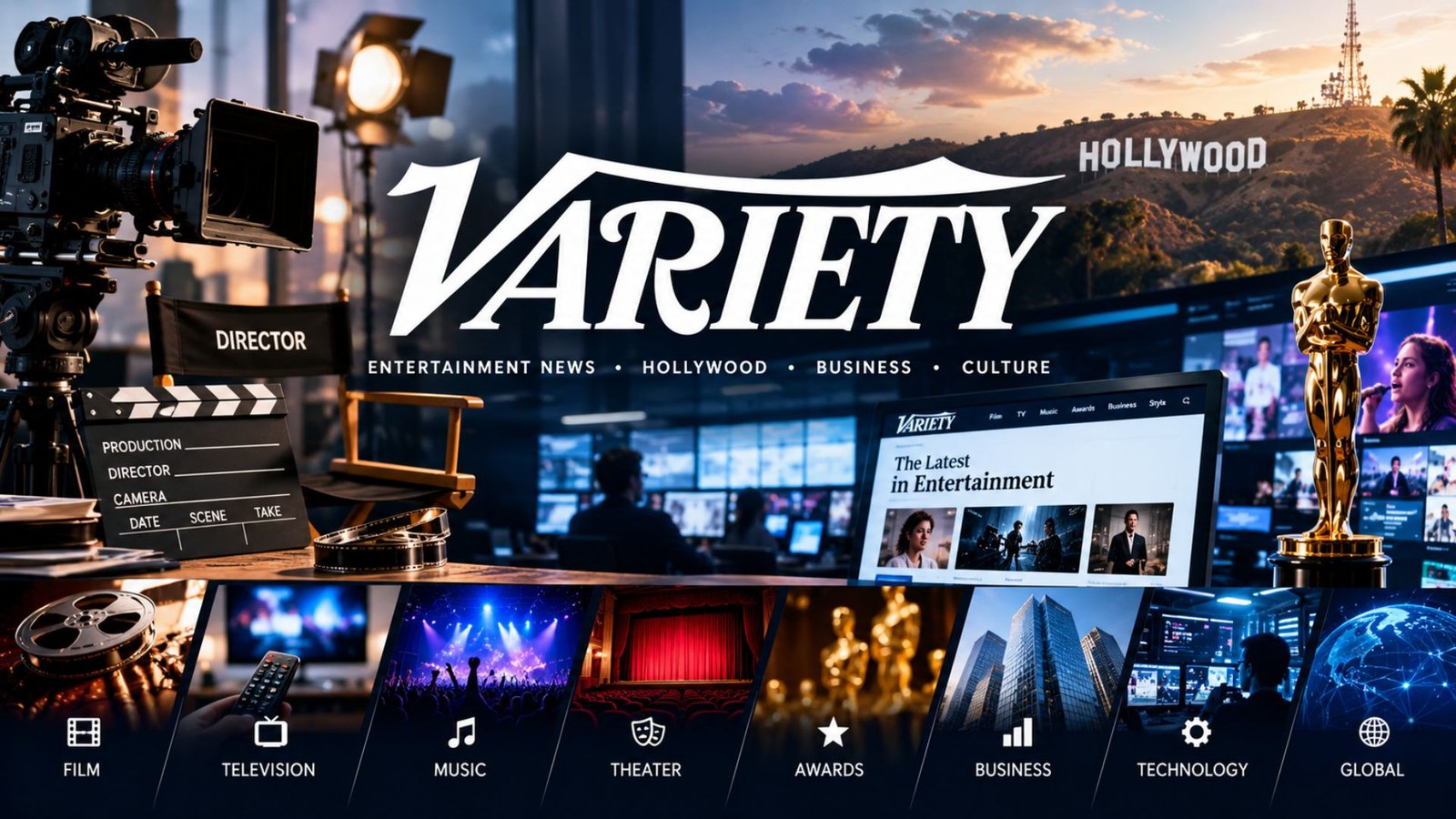
Variety is a long-running American entertainment publication covering movies, television, streaming, music, theater, awards, media companies, and the business of Hollywood. Founded in 1905, it has developed from a trade publication into a major digital entertainment news brand. For readers searching for Variety, the main appeal is its combination of breaking industry news, reviews, interviews, business reporting, and awards coverage.
What Is Variety?
Variety is an entertainment and media publication headquartered in the United States. Its reporting focuses heavily on the people, companies, productions, and business decisions shaping the entertainment industry.
The publication began in 1905 and has maintained a strong connection with the professional side of show business. Unlike entertainment outlets focused primarily on celebrity stories, its coverage frequently examines the business behind movies and television, including studios, streaming platforms, production companies, executives, distribution, and major industry deals.
Its long publishing history also makes the brand useful for people researching entertainment history. The publication’s archives contain decades of reporting about Hollywood, television, theater, and changing media trends.
What Does Variety Cover?
The publication covers a wide range of entertainment topics, allowing readers to follow both popular culture and the business developments behind it.
| Coverage Area | Typical Topics |
|---|---|
| Film | Movie news, reviews, casting, production, festivals, and box office |
| Television | Series, networks, streaming, ratings, and television executives |
| Music | Artists, releases, concerts, and music-industry developments |
| Awards | Oscars, Emmys, Golden Globes, and other major awards |
| Business | Media companies, executives, deals, and industry strategy |
| Theater | Broadway, productions, performers, and theatrical business |
| Technology | Digital entertainment, media technology, and emerging platforms |
| Global Entertainment | International film, television, and media markets |
This broad editorial range means a reader can move from a movie announcement to a streaming-industry story or an awards report without changing publications.
Film and Movie News
Film remains an important part of the publication’s identity. Coverage can include casting announcements, production updates, festival appearances, reviews, box-office reporting, and interviews with filmmakers and performers.
Its movie reporting is particularly useful for readers who want industry context alongside entertainment news. A major film story may involve not only the actors and director but also financing, distribution, release strategy, or the studio behind the project.
Television and Streaming
Television coverage has expanded considerably as streaming services have changed how audiences watch entertainment. Stories can involve traditional networks, streaming platforms, television productions, ratings, cancellations, renewals, and executive changes.
The growth of streaming has also blurred the distinction between television and film. Modern entertainment reporting therefore frequently considers production companies, platforms, global audiences, and changing release models together.
Business and Media Reporting
A major strength of Variety is its attention to entertainment as a business. Its reporting can examine acquisitions, partnerships, executive appointments, production agreements, corporate strategies, and developments affecting studios and media companies.
That information is relevant to entertainment professionals, investors, journalists, students, and readers who want to understand why the industry is changing rather than simply knowing what happened.
💡 Pro Tip:
When researching a major entertainment announcement, read both the initial news report and related business coverage. The second perspective can reveal how a casting decision, merger, streaming agreement, or production deal fits into a larger industry trend.
Why Has Variety Remained Relevant?
Longevity is one of the publication’s defining characteristics. Few entertainment brands have documented the American entertainment business across such a long period.
Its history stretches from the early motion-picture era through the rise of radio and television, the expansion of cable, the home-video market, digital media, and today’s streaming environment. That continuity gives the publication historical value in addition to its current news function.
The brand has also adapted its publishing model. Modern readers can access articles online, subscribe to newsletters, watch video content, listen to podcasts, and follow specialized coverage across different areas of entertainment.
This shift illustrates how entertainment journalism has changed. A publication no longer needs to rely solely on a printed magazine or newspaper. Digital platforms allow news organizations to publish breaking stories quickly while maintaining longer-form reporting and analysis.
Variety and Hollywood’s Global Audience
Although Hollywood remains central to its coverage, the entertainment industry is increasingly international. Movies and television productions frequently involve companies, talent, audiences, and distributors from multiple countries.
Variety has responded to this changing environment by expanding its international reporting and coverage of entertainment markets outside the United States. This broader approach is useful because developments in one regional market can influence studios, streaming services, creators, and audiences elsewhere.
International entertainment reporting also provides context for the growing importance of global box-office results, international productions, and streaming audiences.
How Do People Use Variety Today?
Different readers approach the publication for different reasons.
Entertainment fans may use it to follow movie announcements, television developments, awards news, interviews, and celebrity projects.
Industry professionals may be more interested in business reporting, executive moves, production deals, media companies, and market developments.
Researchers and students can benefit from its historical reporting and industry-focused coverage when examining changes in Hollywood and the wider media landscape.
Journalists and media professionals may use its reporting as part of broader research into entertainment stories and industry developments.
This range of audiences helps explain why the publication has remained relevant despite major changes in how people consume news.
📌 Key Takeaway:
Variety combines entertainment reporting with business journalism, giving readers information about both the creative side of movies and television and the commercial forces influencing the industry.
Frequently Asked Questions
When was Variety founded?
Variety was founded in 1905 in New York City. It initially operated as a trade publication and developed a strong focus on entertainment and show-business reporting. Over the following decades, its coverage expanded alongside major changes in film, television, music, theater, and media.
Who owns Variety?
Variety is owned by Penske Media Corporation, a major media company with a portfolio covering entertainment, business, culture, and related industries. The acquisition took place in 2012, after which the publication continued expanding its digital and multimedia operations.
Is Variety reliable for entertainment news?
Variety is an established entertainment publication with a history dating back more than a century. As with any news source, readers should distinguish between reported facts, analysis, reviews, and opinion. For important claims, checking primary sources and additional reputable reporting can provide useful confirmation.
Does Variety cover streaming services?
Yes. Streaming has become an important part of modern entertainment reporting. Coverage can include streaming platforms, original productions, television strategy, executive developments, business agreements, and changes in how movies and television programs reach audiences.
What makes Variety different from celebrity-news websites?
Its coverage extends beyond celebrity news. The publication places considerable emphasis on the entertainment business, including studios, production companies, executives, media strategy, awards, distribution, and industry economics. That makes it useful for readers interested in how entertainment is produced and distributed as well as who appears on screen.
The continuing relevance of Variety comes from its ability to connect entertainment stories with the business and cultural forces behind them. Its long history provides valuable context, while its digital coverage keeps readers informed about current developments in movies, television, streaming, music, theater, and media.
Conclusion
Variety remains an important source for understanding the entertainment industry, combining breaking news with coverage of movies, television, streaming, awards, music, theater, and media business. Its long history gives readers valuable industry context, while its digital presence keeps the coverage accessible to modern audiences. For anyone following Hollywood and the wider entertainment business, Variety offers a broad view of the stories shaping the industry.
