

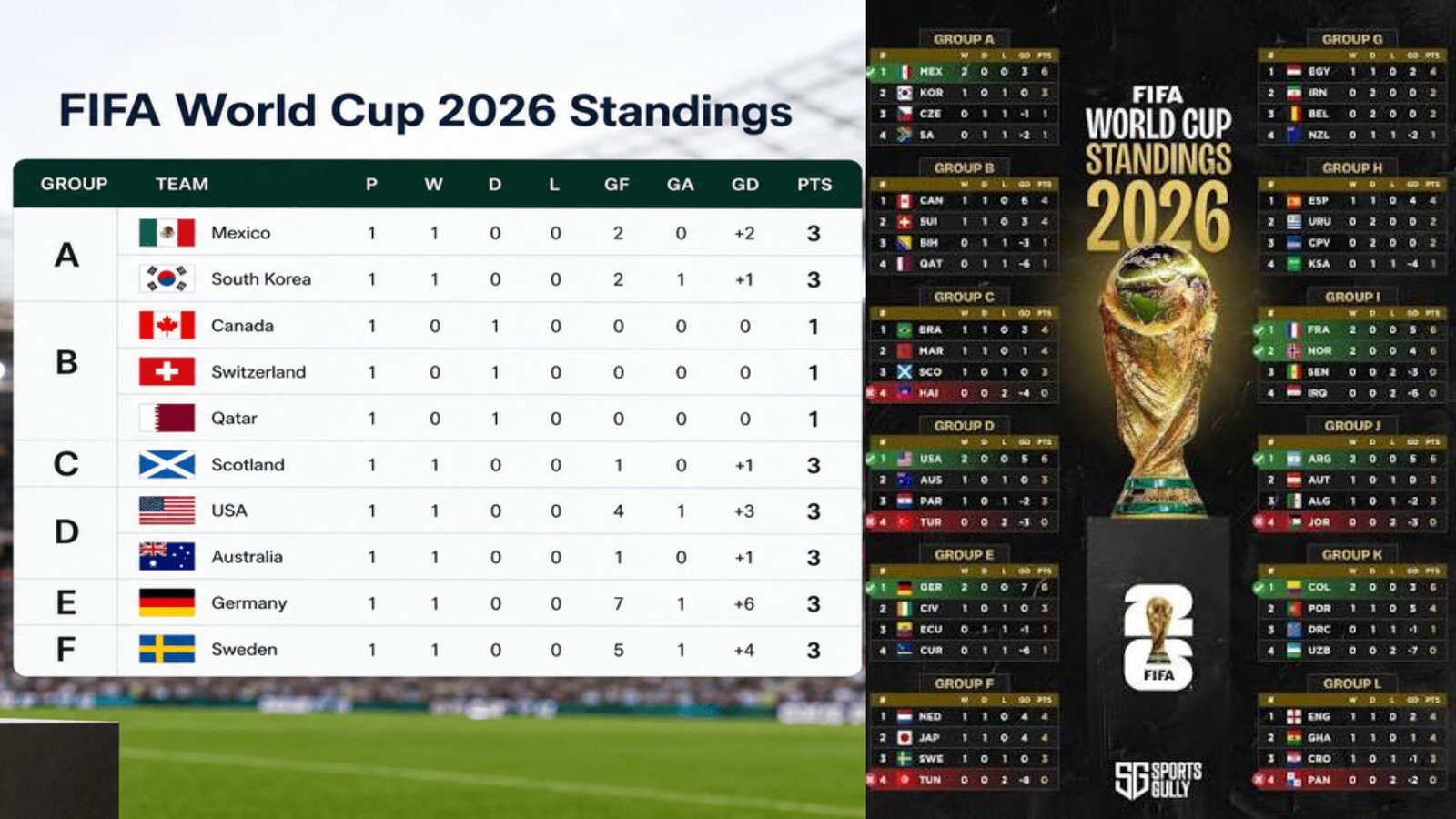
The FIFA World Cup 2026 standings show how teams are performing during the biggest edition of football’s most famous tournament. With an expanded 48-team format, the competition introduces a new structure, more matches, and a larger qualification path for national teams from around the world.
Fans searching for FIFA World Cup 2026 standings usually want to know which teams are leading their groups, who has qualified for the knockout rounds, how points are calculated, and which nations are at risk of elimination. Understanding the table system is essential because the 2026 tournament includes more teams and a new Round of 32 stage.
The tournament is hosted jointly by the United States, Canada, and Mexico, making it the first World Cup organized across three countries. The competition features 48 teams divided into 12 groups of four, with each nation playing three group-stage matches before the knockout rounds begin.
How FIFA World Cup 2026 Standings Work
The standings table follows the traditional football points system, where teams earn rewards based on match results.
A team receives:
- 3 points for a win
- 1 point for a draw
- 0 points for a loss
Teams are ranked in each group based on their total points. If two or more teams finish with the same number of points, FIFA applies additional tiebreaker rules to determine their position.
The main factors considered include:
- Goal difference
- Goals scored
- Head-to-head results
- Fair play record
- Other official FIFA criteria if required
Because only the top teams move forward, every goal can influence the final ranking.
2026 World Cup Group Stage Format Explained
The 2026 tournament marks a major change from previous editions. Instead of 32 teams, the competition features 48 national teams. These teams are placed into 12 groups containing four teams each.
The qualification process after the group stage works differently:
| Stage | Teams Involved | Qualification Rule |
|---|---|---|
| Group Stage | 48 teams | Teams play three matches |
| Round of 32 | 32 teams | Top two teams from each group plus eight best third-place teams |
| Round of 16 | 16 teams | Winners continue through knockout matches |
| Final | 2 teams | Winner becomes world champion |
This expanded format creates more opportunities for smaller nations while also increasing competition among traditional football powers.
Teams to Watch in the 2026 World Cup Standings
Several national teams enter the tournament with strong expectations because of their history, squad quality, and recent performances.
Argentina
The defending champions arrive with confidence after winning the 2022 World Cup. Argentina’s experienced squad and attacking talent make them one of the teams expected to compete near the top of the standings.
France
France remains one of the strongest football nations due to its depth of talented players. Their ability to perform consistently in major tournaments makes them a major contender.
Brazil
Brazil continues to be one of the most successful teams in World Cup history. The national team traditionally enters every tournament with expectations of reaching the final stages.
England
England has developed into a consistent international competitor, with a generation of players capable of challenging the strongest teams.
United States, Canada and Mexico
The host nations receive automatic qualification and will have home support during the tournament. Their performances will attract significant attention as they attempt to make deep runs in the competition.
Why the Standings Matter More in the 2026 Tournament
The expanded format changes the importance of every group-stage match. Previously, teams often needed strong results across three matches to reach the knockout stage. In 2026, third-place rankings also become important because eight third-place teams advance.
This means teams cannot only focus on winning their group. Goal difference, defensive performance, and scoring ability may decide qualification.
For example, two teams could finish with the same number of points, but the nation with a stronger goal difference may advance. A late goal or defensive mistake can completely change the standings.
💡 Pro Tip:
When following live World Cup tables, check points first, then goal difference and goals scored. A team with fewer goals may still qualify if its defensive record keeps it ahead of rivals.
How to Read a World Cup Standings Table
A typical World Cup standings table includes several important columns:
| Column | Meaning |
|---|---|
| MP | Matches Played |
| W | Wins |
| D | Draws |
| L | Losses |
| GF | Goals For |
| GA | Goals Against |
| GD | Goal Difference |
| PTS | Total Points |
These statistics help fans understand not only who is winning but also why a team is positioned higher or lower.
A team with three wins will usually top a group, but complicated situations can occur when multiple teams have similar records.
Impact of New Teams and Global Expansion
The 2026 World Cup provides more opportunities for countries that previously struggled to qualify. The expanded format allows more representation from different football regions, including teams making historic appearances.
This creates more unpredictable standings because traditional football powers may face unfamiliar opponents. Smaller nations can influence group rankings by earning unexpected points against stronger teams.
The wider competition also increases interest from fans who want to follow emerging football nations alongside established giants.
📌 Key Takeaway
FIFA World Cup 2026 standings are more important than ever because the tournament’s 48-team format creates new qualification challenges. Teams must manage points, goal difference, and overall performance carefully because even small results can decide who reaches the knockout rounds.
Frequently Asked Questions
How many teams qualify for the knockout stage in the 2026 World Cup?
A total of 32 teams qualify for the knockout stage. The top two teams from each of the 12 groups automatically advance, along with the eight best third-place teams.
How are FIFA World Cup 2026 standings calculated?
Standings are calculated using points earned from match results. Teams receive three points for a win, one for a draw, and zero for a loss. Additional tiebreakers decide rankings when teams have equal points.
Where can fans check live World Cup standings?
Fans can follow official FIFA platforms, major sports networks, and trusted football websites for updated tables, results, and qualification scenarios during the tournament.
Will the 2026 World Cup have more matches than previous tournaments?
Yes. The expanded 48-team format increases the total number of matches compared with previous 32-team editions, creating a larger tournament schedule.
Which teams are favorites to finish high in the standings?
Traditional football powers such as Argentina, Brazil, France, England, and other top-ranked national teams are expected to compete strongly, although World Cup tournaments often produce surprises.
Conclusion
The FIFA World Cup 2026 standings will provide the clearest picture of which nations are performing best throughout the tournament. With 48 teams, a new qualification structure, and more competitive matches, following the tables will be essential for understanding the road to the championship.
The combination of experienced football giants, rising nations, and host-country ambitions makes the 2026 World Cup one of the most interesting editions in history. As every match affects points and rankings, the standings will tell the story of which teams can handle the pressure and continue toward football’s biggest prize.
