

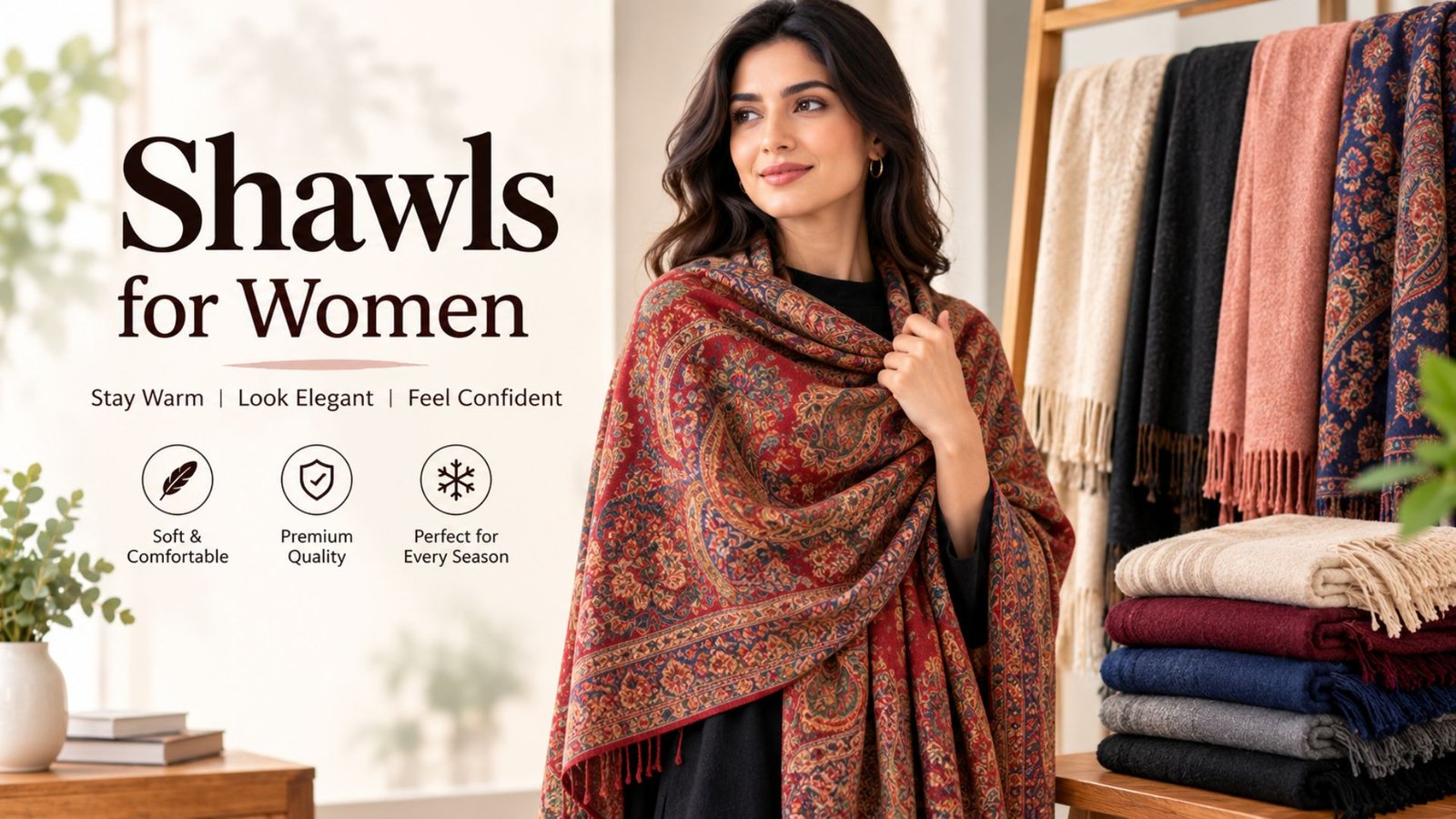
A good shawl can solve several wardrobe problems at once. It adds warmth without the bulk of a coat, completes an elegant outfit, and can work for everything from prayer to formal events. But fabric, size, season, and construction all affect comfort and appearance. This guide to shawls for women explains the main options, compares popular materials, and shows how to choose a shawl that fits your lifestyle and budget.
What Are Shawls for Women Used For?
Shawls are versatile accessories designed to be worn over the shoulders, around the neck, or across the upper body. Their usefulness goes beyond decoration because the right fabric can provide meaningful warmth or a lightweight layer.
Women commonly choose shawls for:
- Everyday outfits
- Weddings and formal occasions
- Religious or prayer settings
- Travel
- Cold weather
- Summer evenings
- Office wear
- Traditional clothing
- Festive and cultural events
- Layering over dresses, suits, and abayas
The best choice depends on where you will wear it, how warm you need it to be, and what type of clothing you want to complement.
How Do You Choose the Best Shawls for Women?
The easiest approach is to start with the intended use rather than the appearance alone.
Ask yourself:
- What season will I wear it in?
- Do I need warmth or mainly decoration?
- Is the shawl for everyday use or special occasions?
- Which fabrics feel comfortable against my skin?
- Do I prefer a traditional or contemporary design?
- How much maintenance am I willing to do?
For example, lightweight silk can suit a formal indoor event, while wool is more practical for cold weather. Cashmere and fine pashmina can offer a luxurious feel, while blended fabrics may provide a more accessible everyday option.
Which Fabric Is Best for Shawls for Women?
There is no single fabric that works best for every woman. Fiber choice changes the shawl’s warmth, weight, texture, appearance, durability, and care requirements.
| Shawl Type | Best For | Main Advantage | Consider Before Buying |
|---|---|---|---|
| Wool | Cold weather | Warm and breathable | Can feel coarse in lower-quality versions |
| Cashmere | Luxury and warmth | Very soft and lightweight | Usually more expensive |
| Pashmina | Elegant traditional styling | Fine, soft feel | Check fiber composition carefully |
| Silk | Formal occasions | Smooth and elegant | Less suitable for serious cold |
| Cotton blend | Everyday wear | Lightweight and practical | Usually less insulating |
| Synthetic blend | Budget-friendly use | Easy styling and wide variety | Feel and breathability vary |
| Heated | Outdoor cold | Added warmth | Needs power or battery management |
Wool has useful natural performance characteristics. The Woolmark Company notes that wool can help manage moisture and temperature because of the structure of the fiber.
Are Summer Shawls for Women Suitable for Warm Weather?
Yes. Summer shawls for women are generally lighter and designed to provide coverage without creating excessive warmth.
Look for:
- Lightweight silk
- Cotton
- Linen blends
- Fine viscose or other lightweight materials
- Open or airy weaves
- Thin decorative wraps
A summer shawl can work especially well with sleeveless dresses, evening outfits, formal clothing, and modest fashion.
For hot climates, avoid choosing a heavy winter shawl simply because its pattern looks attractive. Fabric weight and breathability matter more than decoration.
When Should You Choose Wool Shawls for Women?
Wool shawls for women are excellent for autumn, winter, cool evenings, and travel in colder climates. Wool naturally manages moisture and temperature, which can make it comfortable across changing conditions.
Fine wool can feel considerably softer than coarse wool. Merino wool, for example, uses fine fibers that bend more easily against the skin, reducing the prickly feeling associated with coarser fibers.
Choose wool when you want:
- Reliable warmth
- Natural fiber
- Breathability
- A structured drape
- A shawl for frequent cold-weather use
What Makes Silk Shawls for Women Different?
Silk shawls for women are valued primarily for their smooth texture, elegant appearance, and ability to complement formal clothing.
They are particularly suitable for:
- Weddings
- Evening parties
- Formal dinners
- Dresses
- Traditional outfits
- Lightweight layering
Silk usually makes more sense when appearance and a refined finish matter more than maximum insulation.
If you want a shawl for a formal event, consider the outfit first. A highly decorated shawl may compete with an already detailed dress, while a simpler silk wrap can create a cleaner appearance.
Are Pashmina Shawls for Women Worth Considering?
Pashmina shawls for women are often associated with softness, luxury, and traditional South Asian craftsmanship. However, shoppers should pay close attention to the actual fiber content and product description instead of relying only on the word “pashmina.”
This is especially important when shopping online.
Check:
- Fiber composition
- Product dimensions
- Country of manufacture
- Weave or construction
- Care instructions
- Seller information
- Return policy
In the United States, textile products generally require accurate fiber-content information, along with other labeling details.
💡 Pro Tip
If a seller gives a premium material name but provides no clear fiber information, treat that as a reason to investigate further. A beautiful photograph cannot confirm fiber quality.
How Are Cashmere Shawls for Women Different From Wool?
Cashmere shawls for women are known for their soft, luxurious feel and lightweight warmth. Cashmere is an animal fiber, like wool, but its feel and performance depend on fiber quality, construction, and the finished product.
A cashmere shawl can be a strong choice when you want:
- Softness
- Lightweight warmth
- A luxurious appearance
- Elegant draping
- A premium accessory
However, price alone does not prove quality. Always examine the fiber composition and care instructions before purchasing.
When Do Designer Shawls for Women Make Sense?
Designer shawls for women can be appealing when the accessory itself is part of the outfit’s visual identity.
A designer shawl may offer:
- Distinctive patterns
- Signature detailing
- Higher-end finishing
- Seasonal collections
- Decorative borders
- Coordinated colors
But a recognizable label should not replace practical evaluation. Examine the fabric, construction, size, care requirements, and versatility before making a purchase.
For a shawl you expect to wear frequently, material and construction may matter more than branding.
Which Winter Shawls for Women Provide the Most Warmth?
Winter shawls for women should be selected according to fiber, thickness, weave, and size rather than appearance alone.
For colder conditions, consider:
- Wool
- Cashmere
- Pashmina
- Wool blends
- Heavier woven constructions
A larger shawl can also provide greater coverage. However, an oversized shawl made from a thin material may not be warmer than a smaller shawl made from a well-insulating fiber.
Wool’s natural crimp can trap air within the fiber structure, helping create insulation.
Are Indian Shawls for Women Good for Traditional Outfits?
Indian shawls for women are popular for their connection to traditional textiles, embroidery, patterns, weaving, and regional craftsmanship.
They can complement:
- Sarees
- Salwar kameez
- Lehengas
- Kurtas
- Formal ethnic wear
- Simple western outfits
When choosing a traditional shawl, consider whether the pattern should match or contrast with your clothing.
A heavily embroidered outfit may look better with a relatively restrained shawl. Conversely, a plain outfit can provide space for an ornate traditional design.
What Should You Know About Pakistani Shawls for Women?
Pakistani shawls for women are widely associated with traditional winter clothing, intricate patterns, embroidery, woven designs, and regional textile traditions.
Popular styling choices include wearing them with:
- Shalwar kameez
- Kurtas
- Formal suits
- Winter dresses
- Traditional festive clothing
For everyday use, prioritize comfortable fabric and practical care. For weddings or formal gatherings, decorative borders, embroidery, and richer patterns can create a more striking look.
Are White Shawls for Women Easy to Style?
White shawls for women are among the most flexible choices because white can complement many colors.
They work particularly well with:
- Black
- Navy
- Burgundy
- Emerald
- Pastel shades
- Beige
- Grey
- Traditional prints
The main disadvantage is maintenance. White and very light colors can show makeup, food marks, dust, and other stains more easily.
Before buying, check the washing or dry-cleaning instructions. Care labels are designed to give consumers information about cleaning a textile product, and manufacturers covered by the FTC’s Care Labeling Rule must provide appropriate care instructions.
How Can You Find Warm Shawls for Women Without Excess Bulk?
Warm shawls for women do not always need to be extremely thick. Fiber characteristics and construction can contribute significantly to warmth.
For a comfortable balance, look for:
- Fine wool
- Cashmere
- Pashmina
- Dense woven fabrics
- Larger dimensions
- Layer-friendly designs
Merino wool, for example, is naturally breathable and can help regulate temperature as conditions change.
If you travel frequently, a lightweight insulating shawl can be more convenient than carrying a very heavy winter accessory.
Are Heated Shawls for Women Practical?
Heated shawls for women add an electronic heating element to a traditional wrap. They can appeal to people who spend long periods outdoors or in particularly cold environments.
Before purchasing one, check:
- Battery type
- Heating zones
- Battery runtime
- Charging method
- Washability
- Weight
- Heat controls
- Manufacturer instructions
A heated shawl should not be evaluated only by its advertised temperature. Comfort, battery life, construction, and safe operation matter just as much.
How Should You Compare Shawls for Women Before Buying?
A simple comparison can prevent an attractive but unsuitable purchase.
Buying checklist
For everyday use:
Choose a durable, comfortable fabric that does not require complicated maintenance.
For winter:
Prioritize insulation, size, and fiber quality.
For formal events:
Focus on drape, finish, color, and how the shawl interacts with your outfit.
For travel:
Choose something lightweight, packable, and versatile.
For traditional clothing:
Consider regional patterns, embroidery, borders, and the overall balance of the outfit.
For sensitive skin:
Pay particular attention to fiber fineness and texture.
A product’s label is also valuable evidence. In the U.S., textile labeling rules require covered products to disclose fiber information, while wool products have additional requirements.
How Can You Tell if a Shawl Is Good Quality?
Quality comes from more than softness.
Inspect the shawl for:
- Even stitching
- Consistent weaving
- Clean edges
- Secure embroidery
- No unexplained loose threads
- Accurate fiber information
- Clear care instructions
- Appropriate weight for its intended use
For wool products carrying the Woolmark certification, the program includes testing related to fiber content, durability, colorfastness, and laundering performance.
A quality shawl should also suit its intended purpose. A delicate silk wrap may be excellent for formal wear but inappropriate for rough outdoor use.
How Do You Care for Shawls for Women?
Care depends on the fiber, so the manufacturer’s instructions should take priority.
General care principles
- Read the care label before washing.
- Avoid aggressive washing unless the label permits it.
- Do not assume every wool or cashmere item can be machine washed.
- Fold delicate shawls instead of hanging them for long periods if stretching is a concern.
- Keep luxury fabrics away from unnecessary moisture.
- Store clean and completely dry.
- Avoid excessive heat unless the care instructions specifically allow it.
For U.S. consumers, care instructions form part of the required labeling framework for covered garments.
How Can You Style Shawls for Women?
Styling depends on the shawl’s size, texture, and outfit.
Try these approaches:
- Classic drape: Place the shawl over both shoulders for an elegant appearance.
- One-shoulder style: Let one side fall naturally for a relaxed formal look.
- Neck wrap: Fold a lightweight shawl and wear it around the neck.
- Belted style: Place a larger shawl over the shoulders and add a slim belt at the waist.
- Traditional drape: Coordinate the shawl with a saree, shalwar kameez, or other cultural outfit.
- Travel layer: Keep it loose and easy to remove when moving between indoor and outdoor temperatures.
Color coordination also matters. A neutral shawl can make a colorful outfit calmer, while a patterned shawl can add interest to simple clothing.
What Are the Best Shawls for Women by Need?
The best shawls for women depend on your individual priorities rather than one universal ranking.
| Your Need | Recommended Direction |
|---|---|
| Maximum winter warmth | Wool, cashmere, pashmina |
| Lightweight luxury | Cashmere or fine silk |
| Formal evening wear | Silk or refined decorative shawl |
| Traditional South Asian clothing | Indian or Pakistani styles |
| Everyday winter use | Wool or wool blend |
| Summer layering | Lightweight silk or breathable blend |
| Statement fashion | Designer shawl |
| Outdoor cold | Thick wool or heated option |
| Versatile neutral accessory | White, beige, grey, or black |
| Premium gift | Fine cashmere or pashmina |
Frequently Asked Questions
What is the best material for shawls for women?
The best material depends on the season and purpose. Wool is a strong option for cold weather, silk suits formal lightweight styling, and cashmere or fine pashmina can provide a soft luxury feel. Always check the actual fiber composition and care instructions before buying.
Are wool shawls for women warm?
Yes. Wool can provide effective insulation while also managing moisture and temperature. The warmth of a specific shawl depends on its fiber type, thickness, weave, size, and construction. Fine wool can also feel softer than coarse wool.
Are pashmina shawls for women expensive?
They can be, especially when made from high-quality fibers and detailed craftsmanship. However, price varies significantly. Check fiber composition, dimensions, construction, seller information, and care instructions rather than judging authenticity or quality from price alone.
What are the best shawls for women in winter?
For winter, wool, cashmere, pashmina, and suitable wool blends are strong choices. Look for enough coverage and a fabric suited to your local temperature. A larger shawl can provide useful protection, while fine insulating fibers can reduce unnecessary bulk.
How should white shawls for women be cleaned?
Follow the product’s care label because cleaning requirements vary by fiber. Delicate wool, cashmere, and silk may need specialized care, while some washable fabrics have simpler requirements. Avoid using a generic washing method simply because the shawl is white.
Can shawls for women be worn with western outfits?
Absolutely. A shawl can work with dresses, trousers, skirts, coats, blouses, and office clothing. For a modern appearance, choose a simple drape and coordinate the shawl’s color with one element of the outfit rather than matching every detail.
Final Thoughts
The right shawl should combine comfort, function, material quality, and personal style. Start with the climate and occasion, then narrow your choice by fabric, size, color, construction, and care requirements.
Whether you prefer lightweight silk, traditional Pakistani or Indian designs, warm wool, luxurious cashmere, or a practical heated option, the strongest purchase is one that fits how you actually dress and live. Before buying, read the fiber label, check the care instructions, and compare construction rather than choosing based on appearance alone.
