

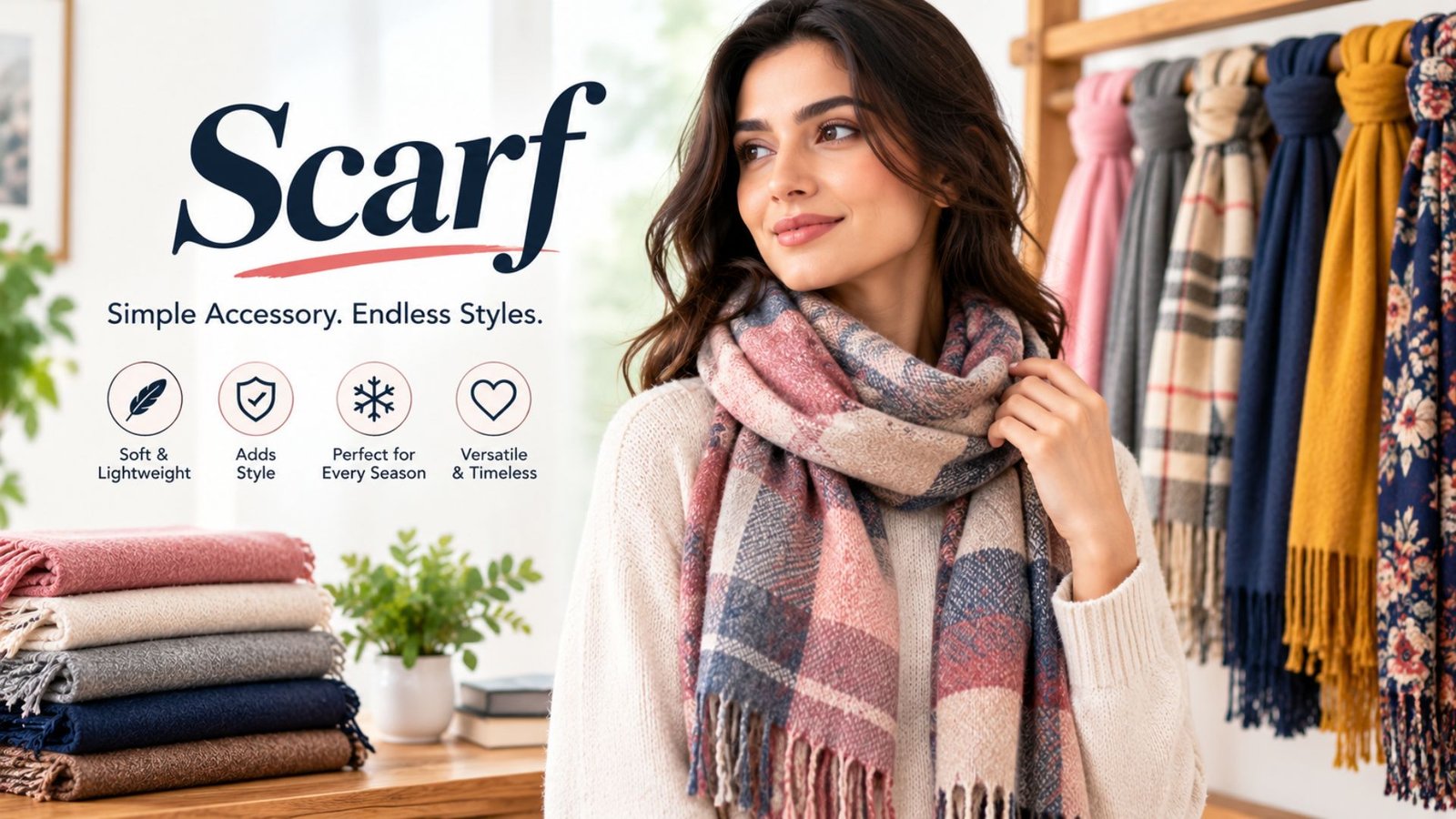
A great scarf can solve several style problems at once. It can add warmth, bring color to a simple outfit, frame the face, protect hair, or become the detail that makes an otherwise basic look feel finished. The challenge is choosing the right fabric, shape, size, and tying method.
This guide explains the main types, materials, luxury options, styling techniques, and care methods in simple terms. You will also learn how to choose between silk, cashmere, pashmina, wool, and lighter fashion styles for different outfits and occasions.
What Is a Scarf?
A scarf is a flexible piece of fabric worn around the neck, head, shoulders, waist, or even as an accessory on a handbag. Traditional versions focus on warmth and protection, while modern designs can serve primarily as fashion pieces.
The shape and fabric determine how an item behaves. A long wool design works well for cold weather, while a small silk square can create a polished accent without adding bulk.
Today, scarves range from affordable everyday accessories to luxury designs from fashion houses such as Hermès, Burberry, Dior, CHANEL, LOEWE, and Acne Studios.
What Are the Main Types of Scarves?
Different shapes suit different styling goals. Before buying one, consider where you plan to wear it and how you want it to sit.
| Type | Best Material | Best Use | Styling Advantage |
|---|---|---|---|
| Long rectangular | Wool, cashmere | Cold weather | Easy wrapping |
| Square | Silk, cotton | Fashion styling | Many tying options |
| Triangle | Wool, cashmere, silk | Neck or shoulder styling | Creates natural drape |
| Infinity | Wool, knit | Casual winter outfits | Quick to wear |
| Skinny | Silk, satin | Fashion accent | Works around neck or bag |
| Head scarf | Silk, cotton | Hair styling | Protects and accessorizes |
| Shawl | Cashmere, wool | Formal or cold-weather wear | More coverage |
| Pashmina style | Fine wool or blended fibers | Dressy occasions | Soft, elegant drape |
A triangle scarf is especially useful when you want a relaxed shape around the neck. A smaller square style works better for knots, bows, hair styling, and handbag decoration.
Which Scarf Material Should You Choose?
Material affects softness, warmth, weight, durability, appearance, and care requirements. The right choice depends more on your use than on the price.
Wool
Wool is practical for cool and cold weather. It provides warmth and works especially well with coats, jackets, sweaters, and casual winter clothing.
Cashmere
A cashmere scarf offers a soft, lightweight feel with a refined appearance. Luxury houses continue to use cashmere in both everyday and statement accessories.
For example, Burberry currently lists its iconic Check cashmere design as 100% cashmere, made in Scotland, with fringed ends and specialist dry cleaning recommended.
Silk
A silk scarf is lightweight and versatile. It can be worn around the neck, tied to a handbag, used as a head covering, or styled around the wrist.
Dior’s current silk scarf collection includes square silk-twill designs and Mitzah styles, while the brand specifically presents silk accessories as pieces that can be worn around the neck, waist, wrist, or bag.
Pashmina
The term pashmina scarf is often used for exceptionally soft, fine wraps. When shopping, check the actual fiber composition and care label rather than relying only on the word “pashmina” in a product name.
Cotton
Cotton is breathable and practical for warmer climates. It is a useful option for casual styling, head coverings, and lightweight layering.
How to Choose the Right Scarf for the Season
Your climate should influence your material and thickness.
For winter, choose wool, cashmere, alpaca, or substantial blends. For spring and fall, medium-weight wool or silk-and-cashmere combinations can provide flexibility.
For summer, lightweight silk and cotton usually work better than thick knits. A breathable fabric can add visual interest without making an outfit feel heavy.
A simple seasonal guide:
- Winter: Wool, cashmere, alpaca
- Spring: Lightweight wool, cotton, silk
- Summer: Silk, cotton, lightweight blends
- Fall: Cashmere, wool, silk blends
How to Tie a Scarf
Learning how to tie a scarf gives you more value from the same accessory. You do not need complicated techniques; a few simple methods cover most everyday situations.
Classic Loop
Fold a long design in half, place it around your neck, and pull the loose ends through the folded section. This creates a neat shape and works particularly well with coats.
Simple Drape
Let the accessory rest around your neck with both ends hanging naturally. This works well when you want style without a tight knot.
Front Knot
Wrap it once around your neck and tie the ends loosely in front. Adjust the knot until the fabric sits comfortably.
Shoulder Wrap
Use a larger shawl or square style across the shoulders. This creates a softer silhouette for dresses and evening outfits.
How to Wear a Scarf With Different Outfits
The best styling method depends on the neckline and overall shape of your clothing.
With a coat, use a long wool or cashmere design and keep the knot simple. With a blazer, a smaller silk style can add color without competing with the lapels.
For a dress, try a loose shoulder drape or a small knot. With a T-shirt and jeans, a lightweight printed piece can provide an easy focal point.
The key is proportion. Large winter fabrics need room to drape, while smaller silk designs work better with clean, structured outfits.
How to Wear a Scarf in Your Hair
A head scarf can become a practical and fashionable hair accessory. You can fold a square design into a narrow band, tie it around a ponytail, or cover the top of the head for a classic look.
A hair scarf also works well when you want to add color without changing your entire outfit. Silk is particularly useful because it folds easily and creates a smooth finish.
Try these three approaches:
- Tie it around a ponytail.
- Fold it into a headband.
- Wear it over the head and secure it beneath the chin or at the back.
Hermès currently offers a 100% silk accessory that can be worn around the neck, head, waist, or in the hair, illustrating how one lightweight design can serve several styling purposes.
How to Style a Triangle Scarf
A triangle scarf creates an easy, relaxed silhouette because the pointed section naturally falls toward the front.
Fold a square design diagonally to create a triangle. Place the long edge around the back of your neck and let the point fall toward the chest.
For a casual look, leave the ends loose. For a cleaner appearance, cross the ends underneath the point and bring them back around the neck.
This shape works particularly well with plain sweaters, denim jackets, trench coats, and simple dresses.
Popular Luxury Scarf Brands
Luxury fashion houses have developed distinctive approaches to materials, patterns, shapes, and branding.
Hermès Scarf
Hermès is strongly associated with silk accessories, but its current offerings also include cashmere-and-silk designs. One current Hermès example combines 95% cashmere with 5% silk and uses hand-rolled edges.
Burberry Scarf
The Burberry scarf is especially recognizable through the brand’s Check pattern. Its current Check cashmere design is made in Scotland and uses 100% cashmere.
Louis Vuitton Scarf
A Louis Vuitton scarf can range from lightweight silk accessories to warmer seasonal pieces. When comparing one, focus on fiber composition, dimensions, construction, and intended use rather than the logo alone.
Dior Scarf
A Dior scarf can be particularly versatile for fashion styling. Dior’s current collections include silk-twill Mitzah and square styles as well as cashmere and wool-and-cashmere pieces.
CHANEL Scarf
A Chanel scarf can be found in materials including cashmere. CHANEL’s current 2026 collections include cashmere styles in different dimensions and color combinations.
LOEWE Scarf
A Loewe scarf is available in materials such as alpaca, silk, wool, mohair, and cashmere. The brand’s current collection also includes designs featuring its Anagram motif.
Acne Studios Scarf
An Acne Studios scarf can be a strong choice for contemporary, relaxed styling. The brand currently offers wool, cashmere, alpaca, mohair, and silk options, including personalized styles.
What Is the Difference Between a Silk and Cashmere Scarf?
The biggest difference is how each material feels and performs.
Silk is lightweight, smooth, and suitable for decorative styling. Cashmere is warmer, softer, and generally better suited to cooler temperatures.
Choose silk when you want:
- Lightweight styling
- Bright prints
- Hair or handbag use
- A polished indoor accessory
Choose cashmere when you want:
- Warmth
- Soft texture
- Cold-weather layering
- A more substantial drape
Some luxury collections combine the two. Hermès, for example, currently lists a 95% cashmere and 5% silk design, while LOEWE also offers silk-and-cashmere styles.
How to Style a Red Scarf
A red scarf can act as the main color accent in a neutral outfit. Pair it with black, navy, gray, cream, denim, or camel for a balanced appearance.
If your clothing already contains several strong colors, use a smaller red design or a simpler knot. With a neutral coat, however, a bright red accessory can immediately create visual contrast.
For a modern look, keep the rest of the outfit simple and allow the red piece to become the focal point.
How to Knit a Scarf at Home
Learning how to knit a scarf is one of the easiest ways to start a basic knitting project.
A beginner can begin with:
- Medium-weight yarn.
- Knitting needles suited to the yarn.
- A simple knit stitch.
- A consistent number of stitches.
- A length that matches the intended wearer.
The simplest beginner pattern is a basic rectangle using the knit stitch throughout. Keep your tension consistent and count stitches regularly so the edges remain even.
Once comfortable, experiment with ribbing, stripes, textured stitches, or different yarn weights.
How to Care for a Scarf Properly
Good care can help preserve softness, shape, and color.
Always check the manufacturer’s care instructions before washing. Luxury brands may recommend specialist cleaning for certain materials; Burberry, for example, lists specialist dry cleaning for its 100% cashmere Check design.
Follow these general principles:
- Read the care label first.
- Avoid unnecessary washing.
- Do not twist delicate fabrics aggressively.
- Keep silk away from rough surfaces and sharp jewelry.
- Fold knit and cashmere pieces instead of hanging them for long periods.
- Store clean and completely dry.
- Protect natural fibers from prolonged dampness.
💡 Pro Tip:
If you are buying one versatile piece rather than building a large collection, choose a neutral color, medium size, and material suited to your climate. You will usually get more outfit combinations from that choice than from an unusually large or heavily decorated design.
How to Choose the Right Scarf When Shopping
Do not judge an accessory by appearance alone. Check the label, measurements, fiber composition, construction, and care instructions.
Before buying, ask:
- Is the material appropriate for my climate?
- Will I wear it casually or formally?
- Does the size work with my preferred tying methods?
- Is the fabric comfortable against my skin?
- Can I maintain it properly?
- Does the color work with clothes I already own?
For luxury purchases, verify the product through the brand’s official website or an authorized retailer. This is particularly useful when comparing materials, dimensions, current designs, and care requirements.
Frequently Asked Questions
What is the best material for a scarf?
The best material depends on the weather and purpose. Wool and cashmere suit cold conditions, while silk and cotton work well for lighter styling. A blend can offer a balance between warmth, weight, softness, and durability.
How do you wear a scarf with a coat?
For a coat, use a long wool or cashmere design and wrap it once around the neck. You can leave both ends hanging, use a classic loop, or create a loose front knot. Keep the arrangement proportional to the coat’s collar and overall shape.
Is cashmere better than silk for winter?
Cashmere is generally the more suitable choice for warmth because it provides more insulation than lightweight silk. Silk is better when you want a thin decorative layer or when the weather is mild.
Can you wear a scarf in your hair?
Yes. A lightweight square design can work as a headband, ponytail accessory, or head covering. Silk is especially easy to fold and tie because it is thin and flexible.
How do you choose the right scarf size?
Choose the size based on how you plan to wear it. Long rectangular designs work well for wrapping, square designs offer multiple styling options, and larger shawls provide shoulder coverage.
Are luxury scarves worth buying?
A luxury accessory can be worthwhile if you value its material, craftsmanship, design, brand heritage, or long-term use. However, a higher price does not automatically make one suitable for every wardrobe, so compare construction, fiber content, size, and care requirements before purchasing.
Conclusion
The right scarf can be much more than a cold-weather layer. A lightweight silk square can transform a simple outfit, a cashmere wrap can add warmth and refinement, and a head scarf can create an entirely different look with minimal effort.
Start with your climate, wardrobe, preferred colors, and styling habits. Then choose the material and shape that fit those needs rather than buying based only on a brand name or seasonal trend.
