

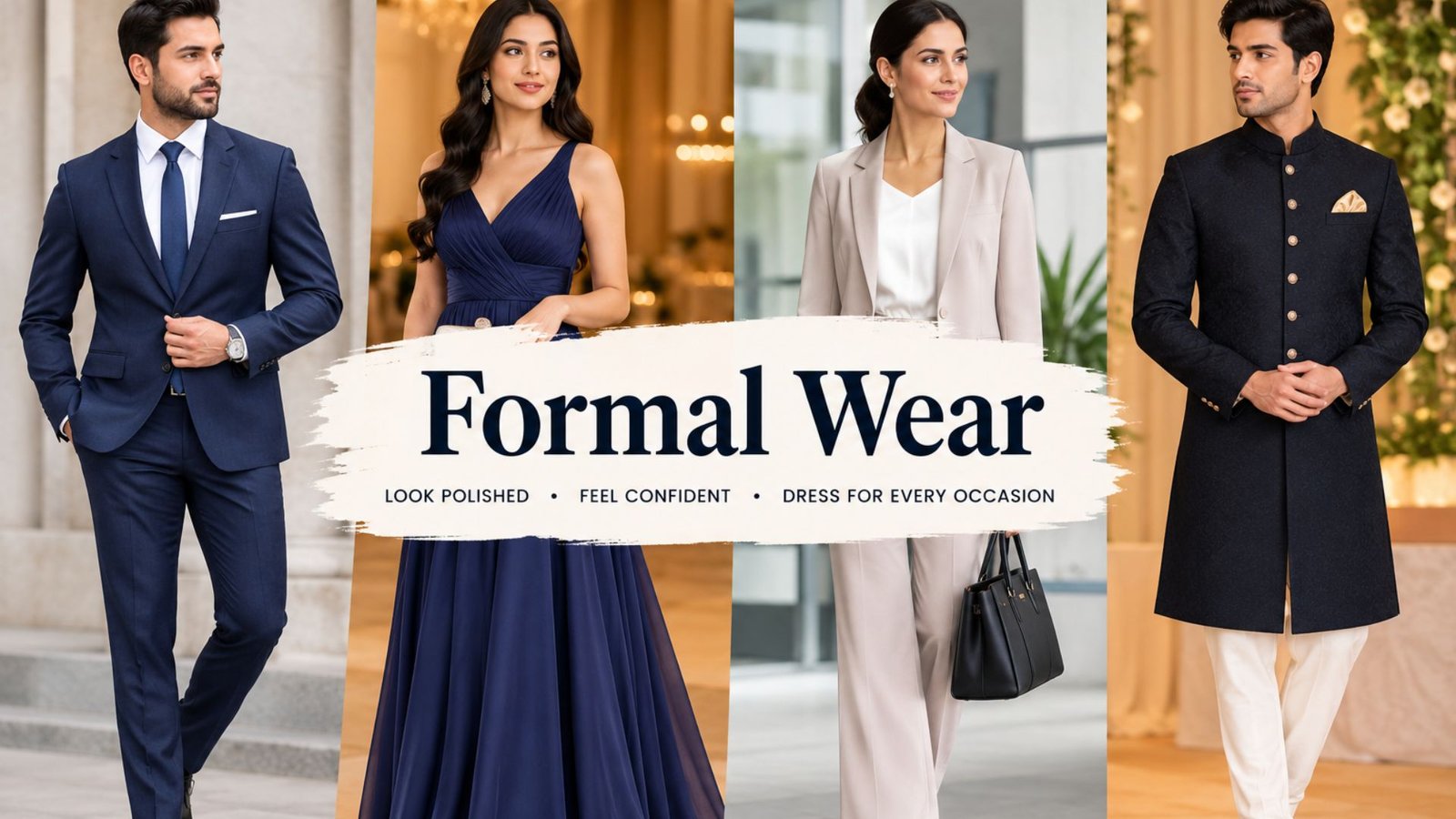
Choosing the right formal wear can feel difficult when an invitation calls for an elegant, polished look. The wrong outfit may feel uncomfortable, look out of place, or cost more than necessary. Fortunately, you can build a stylish wardrobe by understanding dress codes, selecting the right fit, and choosing versatile pieces that suit your budget and occasion.
Formal wear includes tailored suits, evening gowns, elegant dresses, coordinated separates, and traditional outfits for important events. Whether you need mens formal wear for a business meeting, formal wear for women attending a wedding, or semi-formal wear for a dinner party, the best choice balances appearance, comfort, and the event’s expectations.
What Is Formal Wear?
Formal wear refers to clothing designed for occasions that require a polished, sophisticated appearance. The exact outfit depends on the event, its dress code, the time of day, cultural expectations, and personal preferences.
Common examples include:
- Tailored suits and tuxedos for men.
- Evening gowns, formal dresses, and elegant pantsuits for women.
- Coordinated jackets, trousers, shirts, and dress shoes.
- Traditional formal clothing, including sherwanis and other occasion-specific garments.
Formal clothing differs from everyday business casual outfits because it usually involves more structured tailoring, refined fabrics, and carefully selected accessories.
Before purchasing an outfit, check the invitation. A black-tie event requires a different level of formality from a corporate presentation or a semi-formal family celebration.
What Are the Main Types of Formal Wear?
Understanding dress codes helps you avoid buying clothing that does not suit your event.
Black-Tie Attire
Black tie is a formal evening dress code. Men traditionally wear a tuxedo with a bow tie, while women may choose an evening gown or another elegant outfit suitable for the invitation.
Business Formal
Business formal clothing suits important meetings, professional presentations, interviews, and corporate events. Dark suits, dress shirts, conservative ties, tailored trousers, and structured dresses are common choices.
Semi-Formal Attire
Semi-formal clothing sits between everyday business attire and full evening formality. A dark suit without a tuxedo, a cocktail dress, or an elegant coordinated outfit may work well, depending on the event.
Traditional Formal Clothing
Traditional formal outfits reflect cultural preferences and local customs. Options may include a sherwani, a formal kurta with tailored trousers, or an embellished traditional outfit for weddings and celebrations.
Formal Wear for Men: How to Build a Stylish Outfit
The best formal wear for men combines a flattering fit, coordinated colors, suitable fabrics, and clean accessories. You do not need an expensive designer wardrobe to look well dressed.
Essential Mens Formal Wear Pieces
1. A well-fitted suit
A navy, charcoal, or black suit offers versatility. Navy and charcoal work particularly well for business settings, while black is a classic choice for certain evening events.
2. A quality dress shirt
White and light blue shirts coordinate easily with many suits. Check the collar, sleeve length, and shoulder fit before purchasing.
3. Formal trousers
Choose trousers that sit comfortably at the waist and fall neatly over your shoes. Avoid excessive bunching around the ankles.
4. Dress shoes
Oxford shoes, Derby shoes, and other polished leather styles suit many formal occasions. Match the shoe style to the dress code rather than choosing footwear based only on appearance.
5. Accessories
A belt, tie, pocket square, watch, or cuff links can complete the outfit. Keep accessories coordinated instead of allowing them to compete for attention.
For a simple combination, pair a navy suit with a white shirt, a burgundy tie, and dark leather shoes. This outfit works for many professional events and daytime celebrations.
How to Choose Men’s Formal Wear for Different Events
| Occasion | Recommended outfit | Suitable colors | Styling advice |
|---|---|---|---|
| Job interview | Business suit and dress shirt | Navy, charcoal | Keep accessories understated |
| Office presentation | Tailored suit and tie | Navy, gray | Prioritize a clean fit |
| Wedding guest | Suit or tuxedo, depending on dress code | Navy, charcoal, black | Follow the invitation |
| Black-tie dinner | Tuxedo and bow tie | Black or appropriate evening colors | Choose formal dress shoes |
| Graduation | Suit, shirt, and dress shoes | Navy, gray | Select comfortable tailoring |
| Semi-formal party | Suit or blazer with dress trousers | Navy, brown, gray | Adjust formality to the venue |
Formal Wear for Women: Elegant Outfit Ideas
Formal wear for women includes evening gowns, cocktail dresses, tailored pantsuits, coordinated skirts, and sophisticated separates. The right outfit should complement the occasion while allowing you to move, sit, and socialize comfortably.
Popular Women’s Formal Wear Options
Evening gowns: Floor-length gowns suit many formal evening celebrations. Fabric, neckline, sleeve style, and embellishment can change the overall appearance.
Cocktail dresses: These are useful for receptions, parties, and events with a cocktail or semi-formal dress code.
Tailored pantsuits: A matching blazer and trousers provide a polished alternative to dresses. A coordinated blouse and elegant shoes complete the look.
Formal skirts and blouses: A structured skirt paired with a refined blouse creates a versatile outfit for work functions and selected social events.
Traditional formal outfits: Sarees, formal salwar suits, lehengas, and other culturally appropriate ensembles can be excellent choices for weddings and celebrations.
Timeless Formal Wear Pieces for Women
Building a wardrobe around versatile pieces helps reduce unnecessary spending. Consider these options:
- A classic black or navy dress.
- A tailored blazer in a neutral color.
- Well-fitting formal trousers.
- An elegant blouse that works with different outfits.
- Comfortable dress shoes.
- A versatile handbag and understated jewelry.
These pieces can be combined in different ways, making it easier to prepare for professional events, dinners, and special occasions.
Semi-Formal Wear vs. Formal Wear: What Is the Difference?
The difference between semi-formal wear and formal clothing is mainly the level of dress expected at the event.
Formal occasions may require a tuxedo, an evening gown, or a carefully tailored suit. Semi-formal events generally allow more flexibility while still requiring a polished appearance.
| Feature | Formal wear | Semi-formal wear |
|---|---|---|
| Men’s clothing | Tuxedo or formal suit, depending on the dress code | Dark suit or coordinated blazer and trousers |
| Women’s clothing | Evening gown or an elegant formal outfit | Cocktail dress, dressy separates, or tailored pantsuit |
| Footwear | Refined dress shoes or formal evening footwear | Dress shoes, elegant flats, or appropriate heels |
| Accessories | Often more traditional and coordinated | More flexibility for personal style |
| Typical occasions | Black-tie dinners and formal galas | Cocktail parties and less formal celebrations |
| Styling approach | Follow the stated dress code closely | Balance elegance with a slightly relaxed appearance |
Important: Dress-code labels vary between hosts and cultures. If an invitation specifies black tie, cocktail attire, or another named dress code, follow that instruction rather than relying on a general definition.
How to Choose the Right Formal Wear for Your Body Shape
A good fit makes an outfit look intentional and feel comfortable. Instead of focusing on a particular body type, look for clothing that fits your measurements and allows natural movement.
Use these practical checks when trying on an outfit:
- Shoulders: Jacket seams should sit close to your natural shoulder line.
- Chest: You should be able to button the jacket without pulling or creating prominent creases.
- Waist: Trousers and skirts should stay in place without digging into your skin.
- Sleeves: Shirt and jacket sleeves should end at an appropriate length without covering your hands.
- Trouser length: Choose a clean break or another intentional finish rather than excessive fabric pooling around your shoes.
- Dress length: Check the hem while standing, sitting, and walking.
- Movement: Raise your arms, sit down, and walk to make sure the outfit remains comfortable.
Plus Size Formal Wear: Fit, Comfort, and Confidence
Plus size formal wear should offer the same range of style, color, and design as other sizes. The goal is not to hide your body but to find garments that fit well and reflect your preferences.
For men, structured jackets, properly fitted shoulders, and trousers with enough room for comfortable movement can create a balanced silhouette.
For women, options include wrap dresses, A-line gowns, tailored pantsuits, and structured separates. These are starting points rather than rules; personal comfort and preference should guide the final choice.
When shopping online, check the actual garment measurements and return policy. Clothing sizes differ between brands, so a size label alone cannot guarantee a good fit.
Boys Formal Wear: What Should Children Wear to Special Events?
Boys formal wear commonly includes suits, blazers, dress shirts, tailored trousers, and polished shoes. The right combination depends on the child’s age, the occasion, the weather, and how long the outfit must be worn.
For a wedding, a navy suit with a white shirt offers a classic look. For a school ceremony or family dinner, a blazer with dress trousers may provide enough formality without requiring a full suit.
Keep these points in mind:
- Choose breathable fabric when possible.
- Allow enough room for sitting, walking, and playing between formal activities.
- Check sleeve and trouser lengths before the event.
- Select secure, comfortable footwear.
- Avoid complicated accessories that children may find uncomfortable.
A neat, comfortable outfit is often a better choice than an expensive ensemble that restricts movement.
Indian Formal Wear: Traditional and Modern Choices
Indian formal wear includes a wide range of outfits suitable for weddings, religious celebrations, receptions, and cultural events. The best selection depends on the ceremony, regional customs, and the host’s expectations.
Popular options include:
- Sherwani: A structured traditional outfit often worn for weddings and major celebrations.
- Saree: A versatile garment that can be styled for formal occasions with suitable fabric and accessories.
- Lehenga: A coordinated skirt-based ensemble often chosen for festive events.
- Salwar suit: A traditional outfit available in simple, elegant, and heavily embellished designs.
- Formal kurta with tailored trousers: A practical choice for selected celebrations and cultural gatherings.
For a daytime event, lighter fabrics and restrained embellishments may be appropriate. Evening receptions often allow richer colors, decorative details, and more elaborate accessories.
Always consider the venue, weather, and cultural expectations before deciding what to wear.
How to Find Formal Wear Near Me
Searching for formal wear near me can help you locate clothing stores, suit specialists, boutiques, department stores, and rental services. The most useful option depends on your budget, required size, and how soon you need the outfit.
Try this shopping process:
- Search for a specific need, such as “mens formal wear near me,” “formal wear men,” or “formal wear women.”
- Compare store locations, opening hours, customer feedback, and available services.
- Ask whether the shop offers alterations, fitting appointments, or rental options.
- Confirm your measurements and preferred budget before visiting.
- Try the complete outfit, including shoes and accessories, before making a final decision.
If you need clothing for one occasion, renting may cost less than buying. If you attend formal events regularly, investing in versatile pieces may offer better long-term value.
Is Jim’s Formal Wear a Good Place to Start?
Jim’s Formal Wear is a US-based formalwear retailer and rental provider associated with wedding and special-event attire. It may be worth considering if you need a tuxedo, suit, or coordinated wedding-party outfit.
Before choosing a provider, check the current styles, sizing options, rental or purchase terms, alteration arrangements, pickup or delivery dates, and return requirements. Availability and services can differ by location.
For shoppers outside the United States, local tailors and formalwear boutiques may be more convenient.
How Much Should You Spend on Formal Wear?
The right budget depends on how frequently you wear formal clothing, the quality you need, and whether the outfit can work for several occasions.
A useful approach is to compare the total cost rather than the price of a single item. Include alterations, shoes, accessories, cleaning, and potential rental fees.
| Shopping option | Best for | Main advantage | What to check |
|---|---|---|---|
| Budget retail | Occasional events | Lower initial cost | Fabric, stitching, fit |
| Mid-range retail | Regular events | More choice and versatility | Durability and alterations |
| Premium tailoring | Frequent wear or special needs | Personalized fit | Total tailoring cost |
| Formalwear rental | One-time events | Avoids full purchase cost | Fit, deposit, return deadline |
| Secondhand clothing | Budget-conscious shoppers | Potential savings | Condition and alteration needs |
| Custom-made outfit | Specific measurements or design preferences | Greater control over fit | Delivery timeline and final price |
💡 Pro Tip: Before buying a new outfit, check whether you already own suitable trousers, shoes, or accessories. Replacing just one item or getting an existing suit altered may be more affordable than purchasing an entirely new look.
How to Care for Formal Clothing
Proper care helps preserve the shape, color, and appearance of formal garments.
- Read the care label before washing or dry cleaning.
- Hang suits and jackets on appropriately shaped hangers.
- Store formal dresses in a clean, dry space.
- Allow garments to air out after wearing them.
- Use a garment bag when traveling with delicate clothing.
- Clean stains promptly using a method suitable for the fabric.
- Avoid ironing delicate materials at excessive temperatures.
Wool suits, silk garments, embellished dresses, and other delicate pieces may require specialized care. Follow the manufacturer’s instructions instead of assuming every garment needs the same treatment.
Common Formal Wear Mistakes to Avoid
Even an expensive outfit can look unsuitable when it ignores the dress code or fits poorly.
Avoid these common mistakes:
- Wearing a tuxedo when the occasion calls for ordinary business attire.
- Choosing a suit that pulls across the chest or shoulders.
- Pairing heavily worn shoes with an otherwise polished outfit.
- Ignoring weather and selecting uncomfortable fabric.
- Overloading the look with competing colors and accessories.
- Buying online without checking measurements.
- Leaving alterations until the day before an event.
The simplest way to avoid these problems is to plan ahead. Confirm the dress code, try the complete outfit, and leave enough time for alterations.
Frequently Asked Questions
1. What is formal wear?
Formal wear is clothing intended for occasions that require a polished, elegant appearance. It includes suits, tuxedos, evening gowns, formal dresses, tailored pantsuits, and culturally appropriate traditional outfits. The correct choice depends on the event’s dress code, venue, time, and local customs.
2. What should men wear to a formal event?
Men can choose a well-fitted suit, dress shirt, formal shoes, and suitable accessories for many formal occasions. A black-tie invitation generally calls for a tuxedo and bow tie. Always check the invitation because a business function and a formal evening celebration may require different outfits.
3. What is the difference between formal and semi-formal wear?
Formal attire generally requires a more elevated outfit, such as a tuxedo, evening gown, or formal suit. Semi-formal attire allows more flexibility, including cocktail dresses, dark suits, and coordinated separates. The host’s stated dress code should determine your final choice.
4. Where can I find formal wear near me?
Search online for local suit shops, formalwear boutiques, department stores, tailors, and rental providers. Compare measurements, available styles, customer reviews, alteration services, and prices before visiting. If you need an outfit urgently, contact the shop to confirm that your size and preferred style are available.
5. How can I choose formal wear on a budget?
Start with versatile pieces that work for multiple occasions, such as a navy suit, neutral trousers, a classic dress, or a tailored blazer. Compare rental and purchase prices, look for seasonal sales, and consider alterations to clothing you already own. Include shoes and maintenance in your budget.
6. Can traditional Indian clothing count as formal wear?
Yes. Sherwanis, sarees, lehengas, formal salwar suits, and other traditional outfits can be appropriate for weddings, receptions, and cultural celebrations. Choose the design according to the event, regional customs, and the host’s expectations. Some corporate events may require a different style of formal clothing.
Conclusion: Choose Formal Wear That Fits Your Occasion
The best formal outfit is one that matches the dress code, fits comfortably, and suits your personal style. A well-chosen suit, elegant dress, tailored pantsuit, or traditional ensemble can serve you well without requiring an expensive wardrobe.
Start by identifying the occasion, setting a realistic budget, and selecting clothing that fits your measurements. Compare local stores and rental options, check alteration services, and prepare your outfit before the event.
Whether you are shopping for mens formal wear, formal wear for women, plus size formal wear, or boys formal wear, focus on fit, comfort, and suitability rather than trends alone.
Ready to upgrade your wardrobe?
Begin with one versatile outfit that you can confidently wear to several occasions, then build your collection around your needs.
