

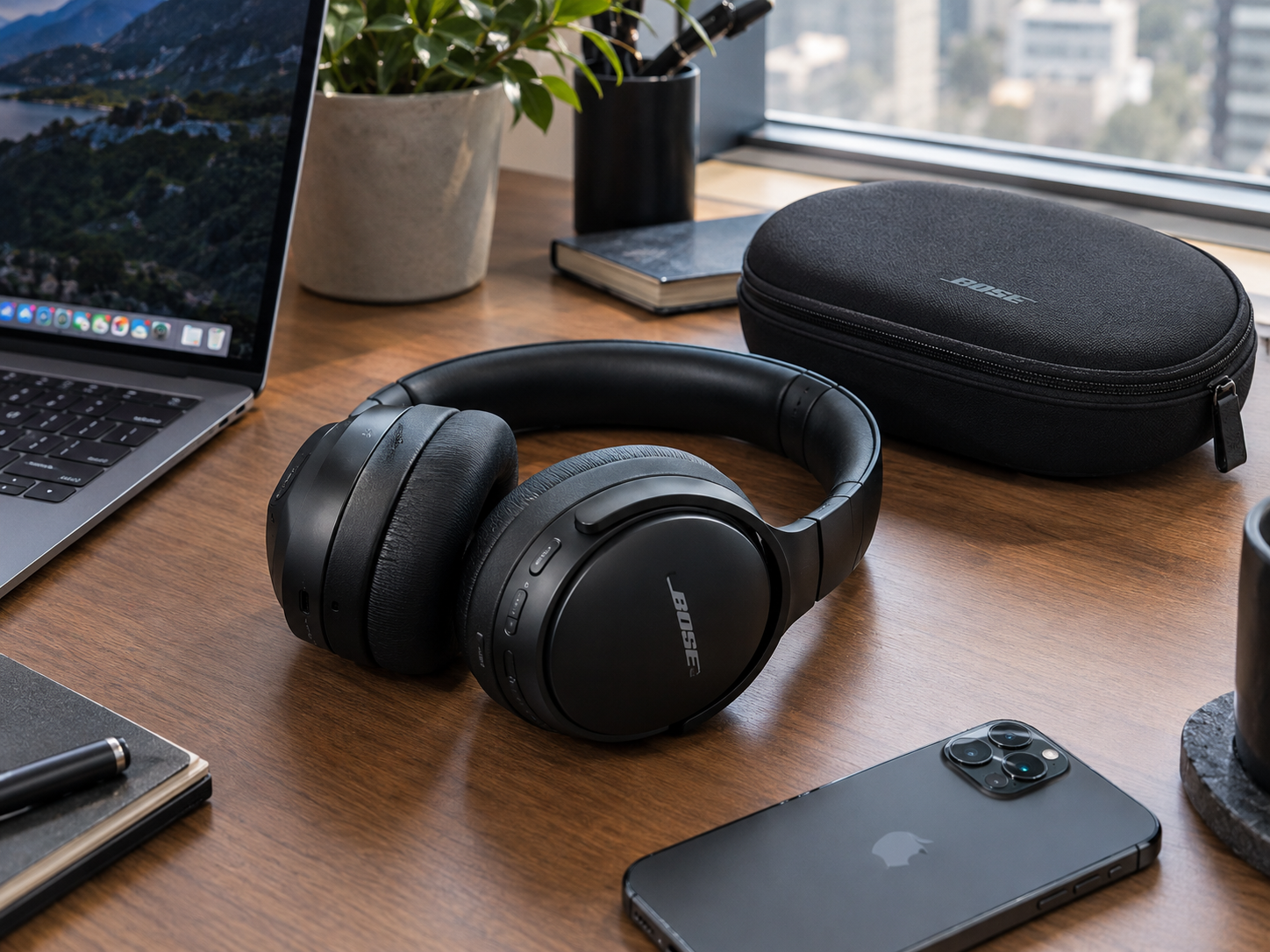
Bose headphones are widely associated with comfortable over-ear designs, strong noise cancellation and listening modes that can be adjusted for different environments. In 2026, the range includes updated QuietComfort models as well as the QuietComfort Ultra Headphones (2nd Gen), giving buyers several ways to balance sound, comfort, battery life and price. Knowing the differences can make it easier to choose a pair for commuting, travel, work, entertainment or everyday listening.
Why Bose Headphones Remain Popular
The appeal of Bose headphones is not based on one feature alone. The brand has built its QuietComfort family around noise control, comfortable earcups and simple controls, while newer models add spatialized audio and more flexible connectivity.
For someone who spends time on trains, planes or busy streets, active noise cancellation can reduce the amount of outside sound competing with music or podcasts. At home or in an office, the same technology can make it easier to focus without constantly increasing volume.
Comfort also matters. Over-ear headphones can become tiring if the clamping force, headband or ear cushions do not suit the wearer. Bose places considerable emphasis on plush ear cushions and stable fits across its current QuietComfort range.
Bose Headphones: Which Features Matter Most?
Different listeners have different priorities, so it helps to look beyond the model name.
Noise cancellation
Bose’s Quiet and Aware modes are designed for different situations. Quiet mode provides strong noise cancellation, while Aware mode lets more environmental sound through. On compatible models, ActiveSense can automatically reduce sudden loud sounds while Aware mode is active.
This is particularly useful when moving between quiet indoor spaces and noisy outdoor environments. It also means you do not always need to remove the headphones simply to hear what is happening around you.
Sound and immersive listening
The QuietComfort Ultra line adds Bose Immersive Audio, which spatializes sound to create a more speaker-like presentation. The second-generation Ultra also adds Cinema Mode, designed to make video content more immersive while keeping dialogue clear.
Spatial audio is not essential for everyone. If your priority is straightforward music playback, podcasts and calls, a standard QuietComfort model may provide everything you need. If films and immersive listening are a major part of your routine, the Ultra range offers more processing options.
Battery life and charging
Battery life varies by model and listening mode. Bose lists up to 30 hours for the QuietComfort Ultra Headphones (2nd Gen), with up to 23 hours when Immersive Audio is enabled. The current QuietComfort Headphones are listed for up to 24 hours.
That distinction matters for frequent travellers. A longer advertised runtime can reduce how often you need to recharge, but real-world battery life can vary with volume, features, connection behaviour and other settings.
Comparing Current QuietComfort Options
| Model | Main strengths | Battery claim | Best suited to |
|---|---|---|---|
| QuietComfort Ultra Headphones (2nd Gen) | Advanced ANC, Immersive Audio, Cinema Mode | Up to 30 hours | Travel, films and immersive listening |
| QuietComfort Headphones (2nd Gen) | ANC, Immersive Audio, USB-C audio | Up to 24 hours | Everyday listening and commuting |
| QuietComfort Headphones | ANC, comfort, simple listening modes | Up to 24 hours | Straightforward everyday use |
Bose announced the QuietComfort Headphones (2nd Gen) in August 2026, with USB-C lossless audio, updated noise-control features and Bose TrueSpatial Technology. The company announced the second-generation Ultra in 2025, adding features including lossless USB-C audio and longer battery life.
Choosing Bose Headphones for Travel, Work and Home
For frequent travel
Prioritise noise cancellation, comfort and battery life. A good travel pair should remain comfortable through long listening sessions and reduce repetitive background noise such as aircraft or train sounds. A foldable design and carrying case can also make storage easier.
For office and study
Look for reliable noise control and an Aware mode that makes conversations easier when needed. Multipoint Bluetooth can also be useful if you regularly switch between a computer and phone. The QuietComfort Ultra Headphones (2nd Gen), for example, support Bluetooth multipoint connectivity for two source devices.
For films and music
If immersive presentation matters, the Ultra line offers more listening modes and spatialized audio. For people who simply want comfortable headphones with effective noise cancellation, the standard QuietComfort range may be a more straightforward fit.
💡 Pro Tip: Try your preferred headphones for an extended session before judging comfort. A pair can feel excellent for ten minutes but become uncomfortable after several hours, especially if you wear glasses or have a particular head shape.
What to Check Before Buying
Start with fit rather than chasing the longest feature list. Consider whether you prefer over-ear isolation, how often you will travel, and whether you need to hear your surroundings during walks or office conversations.
Next, check connectivity. If you regularly use two devices, multipoint support can be more convenient than repeatedly entering Bluetooth pairing mode. If you use a wired setup, confirm exactly what type of USB-C audio support the model provides.
Finally, consider whether advanced features will actually improve your routine. Immersive Audio, custom listening modes and advanced noise control can be useful, but they are not necessary for every listener.
📌 Key Takeaway: The right Bose headphones depend on how you listen. Compare noise cancellation, comfort, battery life, connectivity and immersive features against your daily routine instead of choosing solely by price or model name.
Frequently Asked Questions
Are Bose headphones good for travel?
Yes. QuietComfort models are designed around noise cancellation and comfort, two features that are especially useful during flights, train journeys and commutes. Battery life and fit should still be checked against your own travel habits.
Which Bose headphones have the longest battery life?
The QuietComfort Ultra Headphones (2nd Gen) offer up to 30 hours according to Bose, although enabling Immersive Audio reduces the stated figure to up to 23 hours. Actual battery life depends on usage and settings.
Do Bose headphones work with two devices?
Compatible models with Bluetooth multipoint can maintain connections with two source devices. Bose lists multipoint support for the QuietComfort Ultra Headphones (2nd Gen).
Can you turn off noise cancellation on Bose headphones?
On compatible models, Bose provides options for changing noise-control settings, including modes that reduce or disable active noise cancellation. The exact controls vary by model and software.
Are Bose headphones suitable for calls?
Current QuietComfort models include microphone systems designed for voice calls. However, call performance can vary with wind, surroundings, Bluetooth conditions and the specific model, so buyers who make frequent calls should consider microphone performance alongside music quality.
Conclusion
Bose headphones cover a useful range of listening needs, from simple everyday noise cancellation to more advanced immersive audio. The QuietComfort Ultra Headphones (2nd Gen) focus on premium features and longer battery life, while the newer QuietComfort models provide a more straightforward balance of comfort, noise control and everyday usability. The best choice comes down to the environments, devices and listening habits you expect to use most.
