

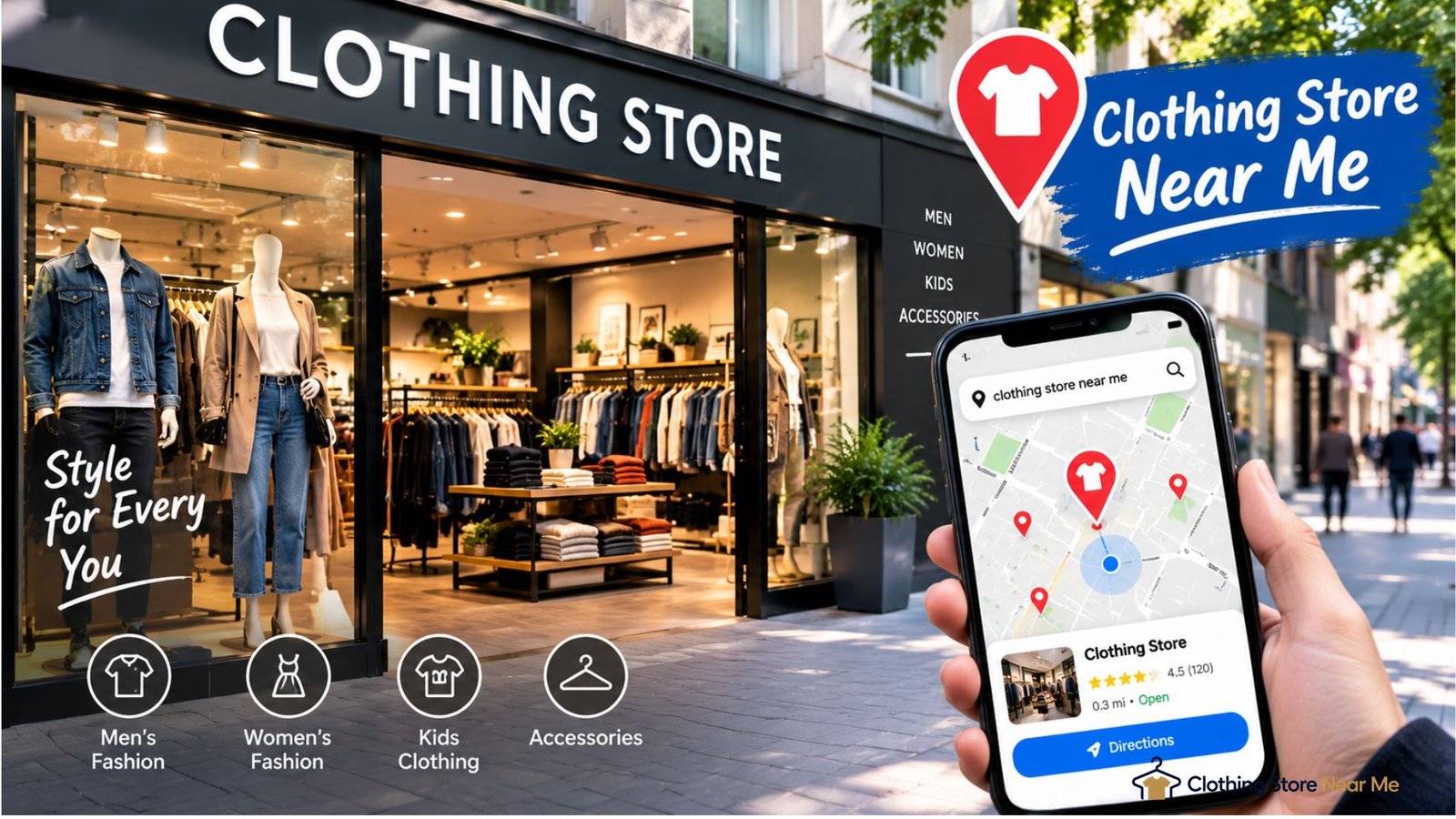
Finding a clothing store near me is often about more than choosing the closest shop. You may need a specific size, style, price range, occasion, or brand, and the nearest store may not have what you want. A good local search can help you compare nearby clothing retailers, check opening hours, explore available categories, and avoid an unnecessary trip.
For shoppers in the USA and UK, local clothing stores can range from independent boutiques and department stores to outlet centers, vintage shops, sportswear retailers, and specialist fashion stores. Knowing what to check before visiting makes the shopping process faster and more productive.
What to Look for in a Clothing Store Near Me
The right store depends on what you actually need. Someone looking for office clothing will have different priorities from someone shopping for casual outfits, children’s clothes, formalwear, or seasonal items.
Start by identifying the type of clothing you need. Useful categories include:
- Women’s clothing
- Men’s clothing
- Children’s clothing
- Formal and occasion wear
- Sportswear and activewear
- Shoes and accessories
- Vintage and secondhand clothing
- Designer or premium fashion
- Budget and discount clothing
Once you know the category, narrow the search by distance, price, store ratings, opening hours, and product availability. A store several miles farther away may be more useful if it carries the exact style or size you need.
How to Search Locally Before You Visit
A search for clothing store near me can produce many results, but the first listing is not necessarily the right choice. Look at the store’s location, hours, photographs, website, product categories, and recent customer feedback.
Check whether the retailer provides useful services such as:
- In-store pickup
- Online stock checking
- Fitting rooms
- Alterations
- Personal styling
- Returns and exchanges
- Accessible parking or entrances
- Extended opening hours
It is also worth checking the store’s own website when possible. Online listings can contain outdated information, while a retailer’s website may provide current details about collections, services, and shopping options.
If you are visiting for a particular item, contact the store before leaving home. A quick call can confirm whether the correct size, colour, or product type is currently available.
Compare Stores Before Choosing
Distance is useful, but it should not be the only factor. Comparing several nearby options can reveal major differences in selection, pricing, services, and convenience.
| What to Compare | Why It Matters | What to Check |
|---|---|---|
| Location | Saves travel time | Distance, parking, public transport |
| Clothing selection | Determines whether the store meets your needs | Categories, sizes, styles |
| Price range | Keeps your purchase within budget | Regular and sale prices |
| Opening hours | Prevents wasted trips | Weekday and weekend hours |
| Return policy | Gives you options if something does not work | Refund, exchange, deadlines |
| Store services | Can make shopping easier | Pickup, alterations, fitting rooms |
This comparison is especially helpful when two stores appear similar in search results. A slightly farther retailer may offer better sizing or a more suitable return policy.
Check Size, Fit, and Fabric Carefully
Clothing can look different on a screen or hanger than it does when worn. If possible, use the fitting room and check how the garment feels while moving, sitting, and reaching.
Pay attention to more than the label size. Different brands can use different measurements, so check the actual garment measurements or the retailer’s size guide when available.
Fabric also affects comfort and care. Cotton, linen, wool, polyester, denim, and blended fabrics can have different characteristics regarding breathability, stretch, durability, and washing requirements.
For expensive garments, inspect stitching, seams, buttons, zippers, lining, and fabric quality before purchasing. A lower price is not necessarily a better value if the item does not meet your needs.
💡 Pro Tip:
If you need an outfit for a specific event, search for the complete clothing category rather than one item alone. For example, looking for formalwear can help you find stores that also carry suitable shoes, accessories, shirts, or tailoring services.
Independent Boutiques vs. Large Retailers
A local boutique may offer a more specialized selection and a different shopping experience from a large national retailer. Independent stores can be useful when you want distinctive styles, personal assistance, or clothing from smaller labels.
Large retailers, meanwhile, may provide broader size ranges, established return systems, online ordering, and the ability to check inventory across multiple locations.
Neither option automatically suits every shopper. Consider what matters most for your particular purchase: selection, price, convenience, service, or the ability to return the item easily.
Don’t Ignore Return and Exchange Policies
A return policy can become important if the garment does not fit or if you change your mind. Before paying, check the store’s policy for refunds, exchanges, sale merchandise, clearance items, and online purchases.
In the UK, consumer protections generally require goods to be as described, of satisfactory quality, and fit for purpose. Rules for changing your mind can differ between purchases made in person and those made online. For online, mail, and telephone purchases, eligible customers generally have a cancellation period under distance-selling rules.
In the USA, return policies can vary by retailer, so the Federal Trade Commission recommends checking deadlines, return conditions, fees, and relevant documentation before completing a purchase.
Keep your receipt or other proof of purchase. If you experience a problem with an item, having purchase records can make communication with the retailer much easier.
Shopping for Clothes on a Budget
Finding affordable clothing does not always mean buying the cheapest item. Consider cost per wear, fabric quality, versatility, and how often you expect to use the garment.
Sales can be useful, but check the original price, sale terms, and return conditions. Clearance items may have different store policies, and some retailers restrict returns on particular merchandise.
You can also compare local stores with outlet shops, charity shops, secondhand retailers, and seasonal sales. For basics such as T-shirts, jeans, jackets, and everyday footwear, comparing several retailers can help you understand the normal price range before buying.
When a Clothing Store Near Me Is Better Than Online Shopping
Online shopping offers convenience, but visiting a physical store has practical advantages. You can feel the fabric, inspect construction, compare colours under real lighting, and try different sizes before paying.
A clothing store near me can also be particularly useful when you need something quickly for a wedding, interview, trip, party, school event, or work requirement. There is no need to wait for delivery, and you can often identify fitting problems immediately.
On the other hand, online shopping may provide a wider selection or access to brands unavailable locally. A sensible approach is to use both options: research online, then visit a store when trying the item in person adds value.
📌 Key Takeaway:
The best local clothing shop is not necessarily the closest one. Compare product selection, size availability, price, opening hours, services, and return conditions before making the trip.
Frequently Asked Questions
How do I find a good clothing store near me?
Start with a local search and narrow the results by clothing type, distance, opening hours, and customer feedback. Then visit the retailer’s website to confirm its categories and services. If you need a specific size, brand, colour, or item, contact the store first rather than assuming it is currently in stock.
What should I check before visiting a clothing store?
Check opening hours, location, parking or transport options, available clothing categories, size range, and return policy. If you need a particular item, verify stock beforehand. This is especially useful for formalwear, specialist sizes, seasonal clothing, and products that may sell quickly.
Are local clothing stores cheaper than online retailers?
Not necessarily. Prices vary between retailers, brands, promotions, and product categories. A physical store may offer immediate access and eliminate delivery costs, while online retailers may have broader selections or different promotions. Comparing the total cost and return conditions gives you a more useful picture than comparing the ticket price alone.
Can I return clothes bought in a physical store?
The answer depends on the retailer’s policy and the reason for the return. In the UK, rights for faulty or misdescribed goods differ from situations where a shopper simply changes their mind after an in-store purchase. Always check the retailer’s terms before buying.
Should I check a store’s reviews before visiting?
Reviews can help identify recurring comments about service, selection, sizing, or shopping conditions, but they should not be your only source of information. Compare recent reviews with the retailer’s own website and, when necessary, contact the store directly for current information about stock or services.
Conclusion
A useful local clothing search starts with knowing what you need rather than simply choosing the closest result. Compare selection, sizing, pricing, opening hours, services, and return conditions before visiting. A clothing store near me can be the most convenient option when you need to try something on, inspect quality, or buy an outfit quickly, while online research can help you prepare before stepping into the store.
