

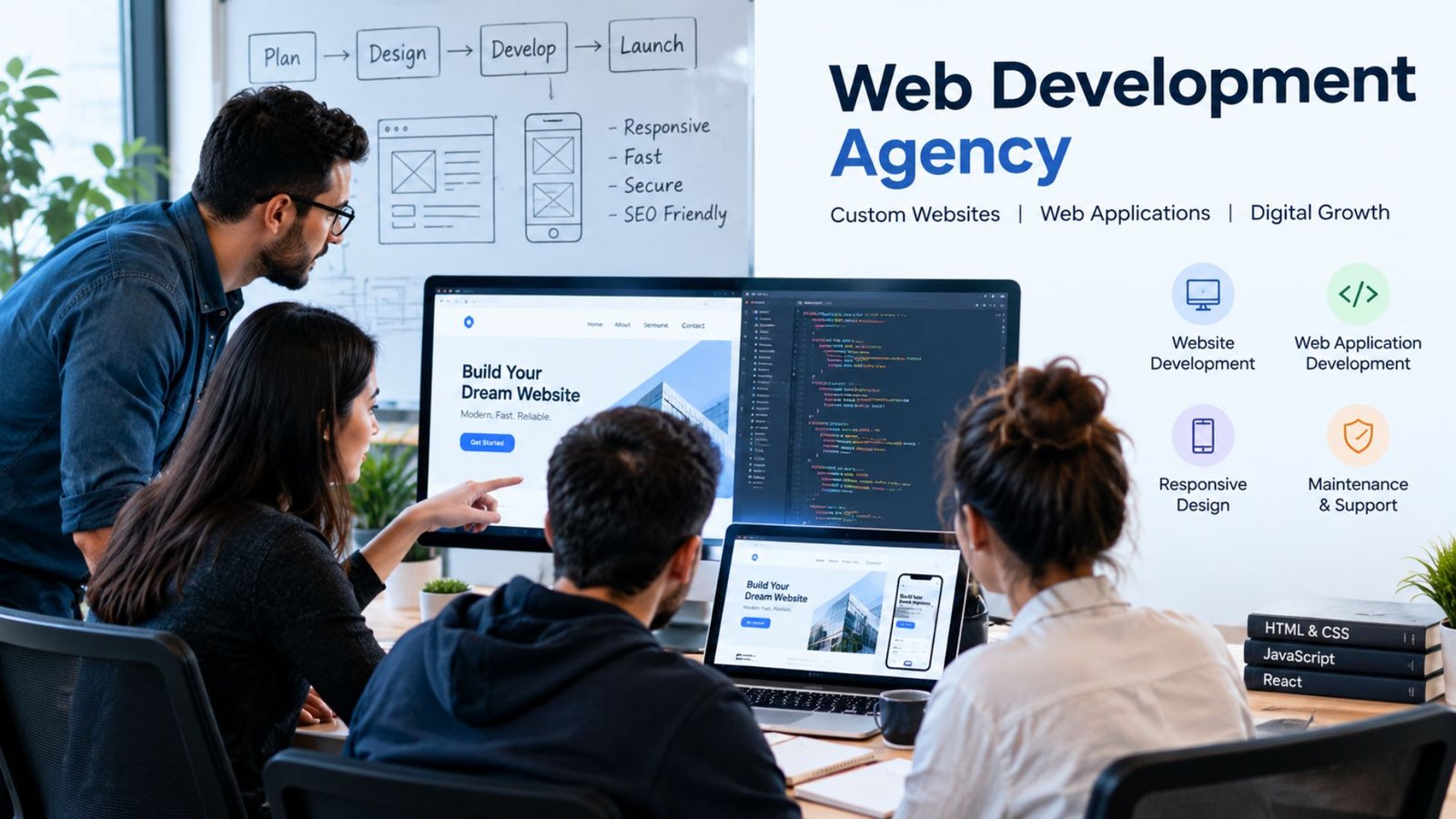
A web development agency helps turn a business idea, service, or digital product into a functional website or web application. The right partner can handle planning, interface development, technical architecture, testing, deployment, and ongoing improvements.
The key is not simply finding a team that can write code. A capable web development agency should understand what the website needs to accomplish, who will use it, how it connects with other systems, and how it can remain maintainable as the business grows.
What Does a Web Development Agency Do?
A web development agency designs and builds websites and web applications around specific business requirements. Its work may include front-end development, back-end programming, content management systems, e-commerce functionality, database integration, APIs, performance optimization, security, testing, and maintenance.
Some agencies also provide UX/UI design, technical SEO foundations, analytics implementation, or conversion-focused improvements. The exact service mix varies, so evaluate an agency against your actual project scope.
Services to Expect
Front-End Development
Front-end work covers what visitors see and interact with. Developers use HTML, CSS, JavaScript, and appropriate frameworks to create responsive interfaces across screen sizes and browsers.
Back-End Development
Back-end development handles server-side logic, databases, authentication, business rules, integrations, and other functions users do not directly see. For web applications, this layer influences how reliably the product processes information.
CMS and E-Commerce Development
A content management system can make routine publishing easier. E-commerce development may involve product catalogs, checkout, payment integrations, inventory connections, customer accounts, and order workflows.
Maintenance and Support
A website is not finished when it goes live. Updates, monitoring, bug fixes, security reviews, backups, content changes, and performance work may all become part of ongoing support.
| Project need | What to evaluate | Useful question |
|---|---|---|
| Business website | CMS, responsiveness, SEO foundations | Who manages content after launch? |
| E-commerce site | Checkout, payments, integrations | How will orders be handled? |
| Web application | Architecture, database, authentication | How will it handle growth? |
| Website redesign | Migration, UX, redirects | How will existing traffic be protected? |
How to Choose a Web Development Agency
Start with the business objective. A lead-generation site has different requirements from a customer portal, online store, publication, or subscription application. Define the main actions users should take and the systems the website must connect with.
Then examine relevant work. Look for projects similar to your business model, technical requirements, or customer journey. A visually impressive portfolio does not automatically demonstrate experience with complex integrations.
Ask how the agency manages projects. Find out who handles communication, how requirements are documented, how approvals work, and how changes affect scope and timing.
Technical ownership matters too. Clarify who controls the domain, hosting account, source code, analytics, content system, and third-party services. You should have appropriate access to the assets you paid to create.
💡 Pro Tip:
Before signing, request a written list of deliverables, technologies, integrations, testing responsibilities, launch tasks, support, and ownership terms. Clear documentation can prevent misunderstandings later.
What Makes a Development Project Successful?
Strong projects begin with clear requirements and realistic priorities.
Performance should be considered from the beginning. Heavy images, unnecessary scripts, inefficient code, and poorly managed third-party services can slow pages. Testing important user journeys on realistic devices and connections can reveal problems that desktop-only reviews miss.
Accessibility also deserves early attention. Meaningful HTML structure, keyboard-accessible interactions, useful alternative text, properly labeled forms, and compatible interfaces can make websites easier for more people to use.
Security should be built into the process. Depending on the project, this can include secure authentication, sensible permissions, input validation, dependency management, protected credentials, backups, and a plan for addressing vulnerabilities.
A web development agency should explain its testing process. Testing may cover functionality, forms, navigation, responsive layouts, browser behavior, integrations, accessibility, performance, and regression issues.
Common Mistakes to Avoid
Businesses often focus heavily on appearance and underinvest in structure. A polished interface cannot compensate for confusing navigation, weak content, poor mobile behavior, or broken conversion paths.
Choosing only by the lowest initial quote can also create problems. Costs may change with scope, integrations, custom functionality, content migration, testing, and support. A cheaper proposal may exclude work that becomes necessary later.
It is also risky to begin development before requirements are clear. Changing fundamental functionality halfway through a project can create delays and additional costs.
Questions to Ask Before Hiring
Before choosing a web development agency, ask:
- Have you built projects with requirements similar to ours?
- Which parts of the work are handled in-house?
- Who owns the code, accounts, and website assets?
- How do you manage scope changes?
- What testing is included before launch?
- What support is available after launch?
- How will accessibility, security, and performance be addressed?
Clear answers can reveal more about a provider’s process than a long list of technical terms.
📌 Key Takeaway
The right development partner should fit the project’s goals, technical complexity, budget, ownership requirements, and long-term support needs. Focus on relevant work, clear deliverables, sound development practices, and transparent communication.
Frequently Asked Questions
How much does a web development agency cost?
There is no universal price. Cost depends on site size, design requirements, functionality, integrations, content migration, testing, and support. A simple business website and a custom web application can have very different scopes. Request a detailed proposal that separates major deliverables.
How long does website development take?
Timelines vary with project complexity. A small marketing site may require much less work than an e-commerce platform or custom application. Content readiness, feedback speed, integrations, revisions, and testing can also affect delivery.
Should a small business hire an agency?
A small business may benefit from an agency when it needs custom functionality, several specialists, strategic guidance, or ongoing support. For a straightforward site with limited requirements, a freelancer or managed website platform may also work.
What should I look for in a development portfolio?
Look beyond visual design. Review navigation, mobile behavior, functionality, page speed, accessibility, content structure, and integrations where visible. Ask what work the agency actually performed and whether the project involved custom development, redesign, migration, or optimization.
Does an agency provide website maintenance?
Many agencies offer maintenance, but it is not automatically included. Ask about updates, backups, security monitoring, bug fixes, content changes, hosting, performance checks, and response times. A written support agreement can clarify coverage and extra costs.
Conclusion
A web development agency can be a practical partner for businesses that need a website or web application built around specific goals rather than a one-size-fits-all template. Start with clear requirements, examine relevant work, confirm ownership and support terms, and evaluate the team’s approach to performance, accessibility, security, and testing.
The right fit depends on the project’s users, functionality, technical demands, budget, and long-term plans.
